
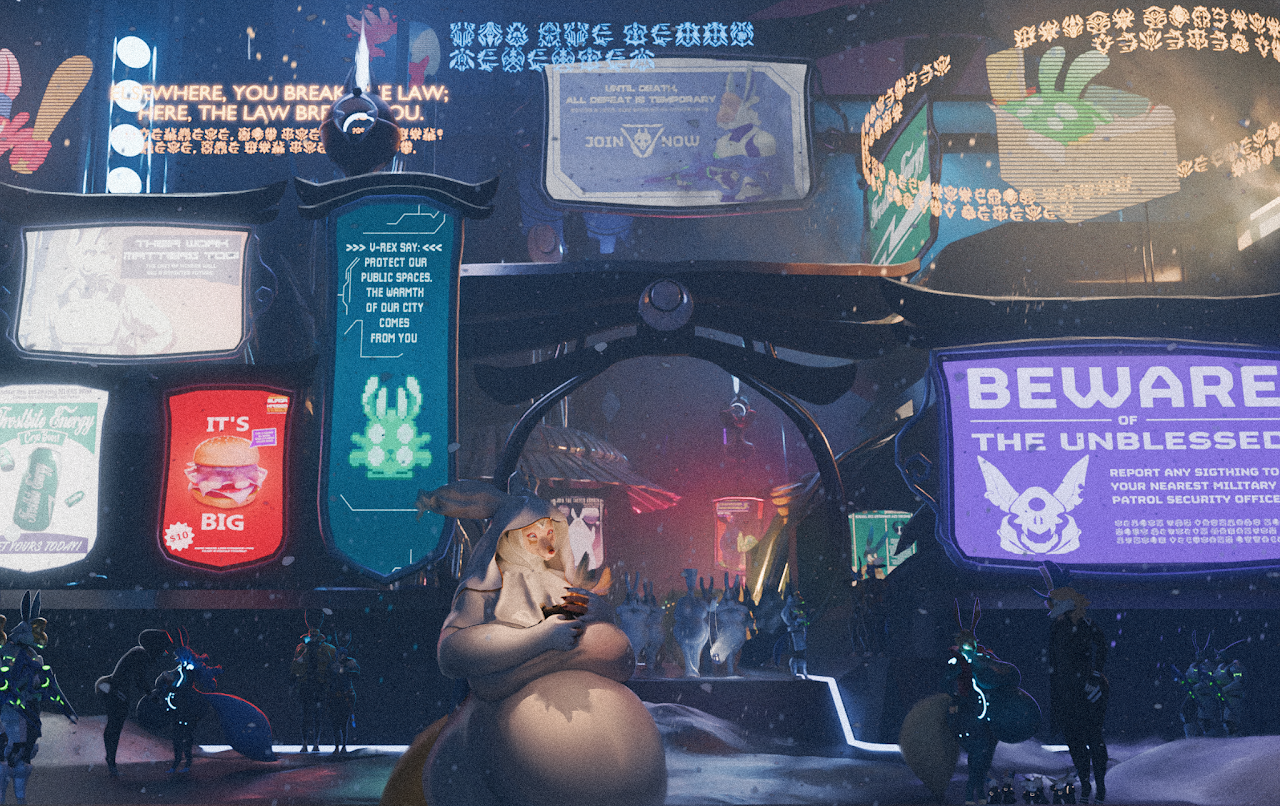
Originally known as the Gelodian Empire, it stood for millennia as the most vast and imposing stellar power in the Nifelhaim system.
Though the Empire eventually fell undone by civil wars, heresies, and betrayals it was reborn as the Gelodian Kingdom, founding member of the CRN (Coalition of Realms of Nifelheim).
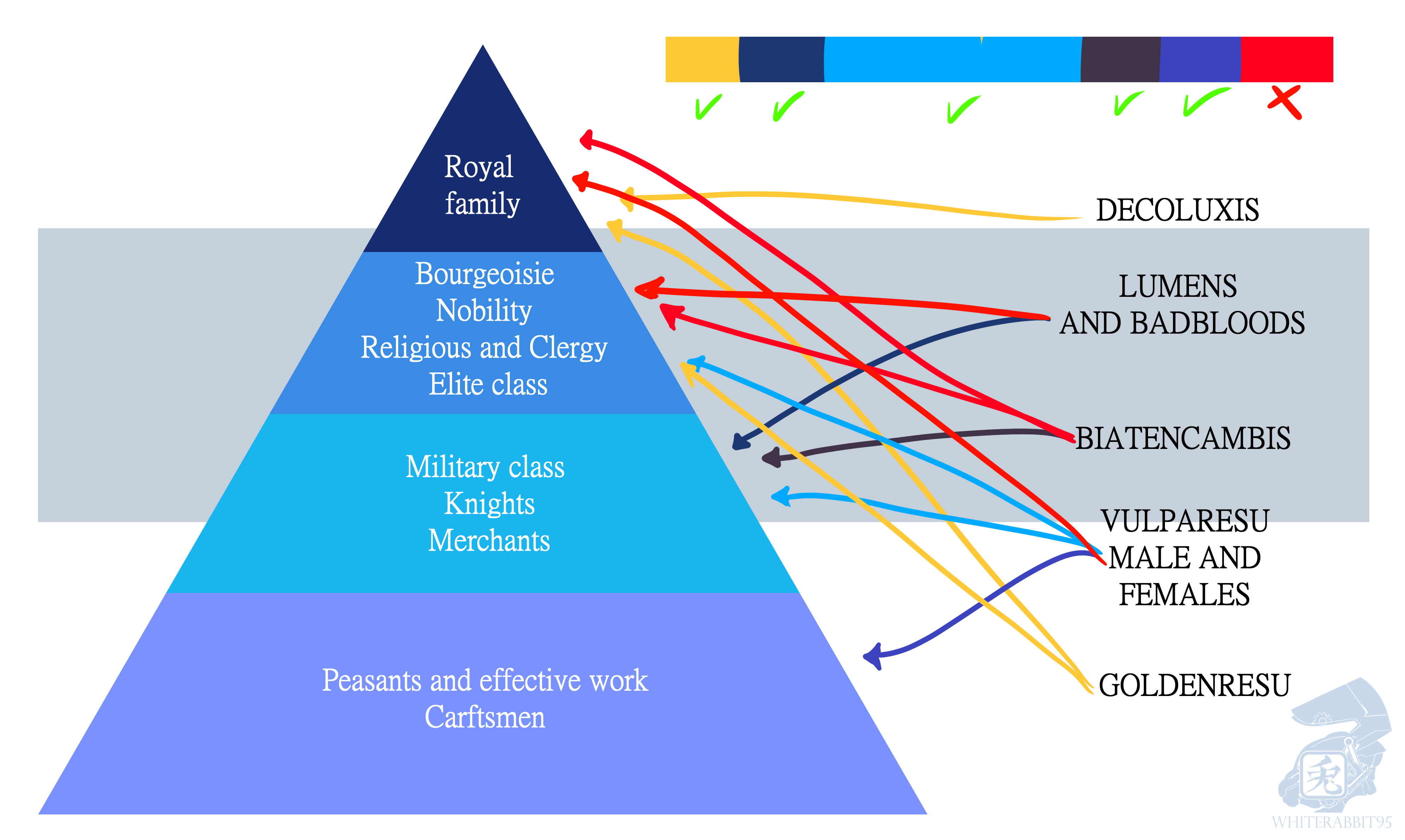
Gelodian society is structured around four fundamental roles, each represented by a race sometimes two though their place within the system aligns more closely with the concept of caste, defined by the specific function they are destined to fulfill within the fabric of the Realm. This function is not merely symbolic; it is biological, cultural, and spiritual, imposed from their very first breath.
Relationships between castes are permitted, though not all are well regarded or treated equally, especially when they disrupt the established balance.
The distinction between races and roles has been reinforced over millennia by the Decoluxis, who shaped the genetic, magical, and structural laws that keep Gelodian society functioning as a living, unbreakable, and obedient machine. All of this under the guidance of a single sovereign: the King of the Black Crown, the only male member of the royal family capable of bearing the Primordial Blood and the Crown itself.
The Gelodian nobility is organized into Houses, inspired by ancient bloodlines and entrusted with ceremonial and political functions. These Houses are usually led by the eldest member, most often the one who commands the greatest arcane mastery within the lineage. Although all members bear the family name and title, only those born as Decoluxis are truly deemed worthy of embodying the legacy. The rest, though noble by birth, are treated as second sons, shadows. Who living beneath the weight of a name they can never rise beyond.
This system, though rigid, has been challenged by some minor Houses that choose to disregard the racial restrictions. Nevertheless, only the Decoluxis, can carry the Primordial Blood that grants the right to claim the throne and the Black Crown. This limitation has sparked countless wars for sovereignty, conflicts that devoured entire generations, until only three Great Houses remained. These now dominate the political landscape, followed by a small number of minor Houses, bound by oath or alliance.

The Kourin House is one of the most prominent noble families in Gelidium, established more than two millennia ago, before the Thousand-Year War, in the rugged mountains near what is now Elysium. Its foundation dates back to Takeshi Kourin, a Terran man who appeared without explanation one day on the planet, then rescued and adopted an abandoned vulparesu cub in the misty wooded slopes, naming her Kaguya.
After the collapse of the House of Lumis in the midst of the caste wars, the Kourin claimed the throne and, consequently, the Black Crown. This triumph gave them control over the territories of what would become the CRN and multiple planets in Nifelheim. Ryunosuke II Kourin is currently the eldest of the family and king of all.

The Blackwood House is one of the oldest houses in Gelidium, originally a minor house and vassal of the Kourin. Its foundations were built on the tireless efforts of humble carpenters and woodcutters. They forged an empire in the dense forests of Gehenna, claiming vast tracts of land over the years that gave them almost feudal dominion. Over the centuries, the Blackwoods climbed the ladder of power through alliances and marriages that opened doors and banks for them. These initial acquisitions gave them the power they needed to break into the ranks of the major houses, transforming their forestry fortune into an arsenal of economic influence that eclipsed their rivals, even allowing them to arm their own personal army.
Much is said about the Blackwoods, who have engineered conspiracies and pacts that have elevated their status, extracting favors and debts from others to achieve the impossible. This has turned them into a force that operates under the noses of other families and even shapes politics at will. Currently, the Blackwood house faces a crisis thanks to its most important member, Queen Alina Blackwood.
Emerging as one of the most humble lineages of Gelidium, forged in recent decades under a cluster of small families unified as if they were a Terran clan, it was not born of a single founder, but of humble farmers, herbalists, poets, and artists of low birth. They came together, guided by oaths.
Recognized for their modest innovations in agriculture and livestock, the Farhmhearth rose to prominence, not with swords or gold. However, their rise and way of life has sown anger among the lesser houses due to their different customs of communal ideas. They advocate assemblies where all citizens, including non-Gelodian species, have the right to vote. Being a rather secretive house, they have managed to stir up the social masses of Gelodium.
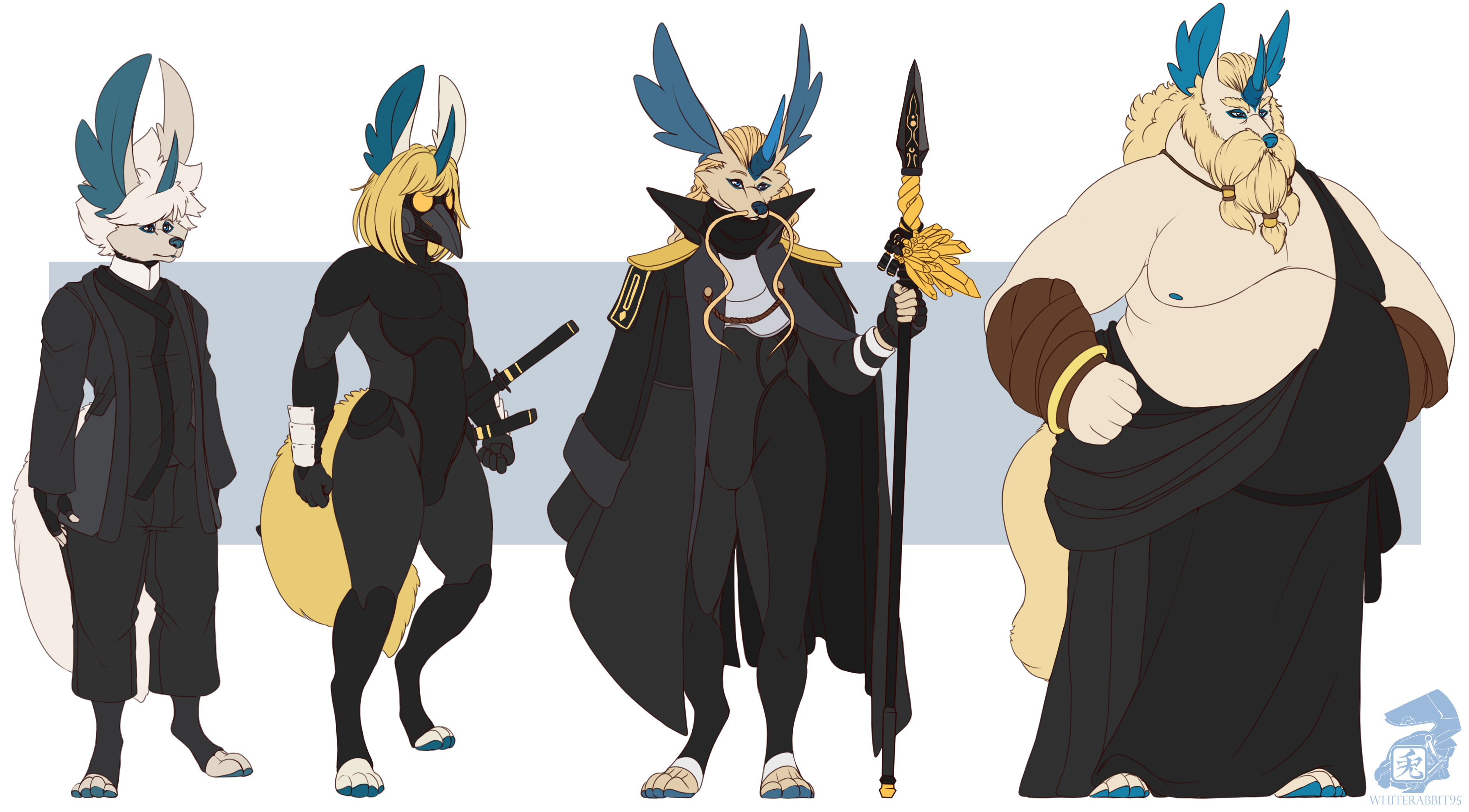
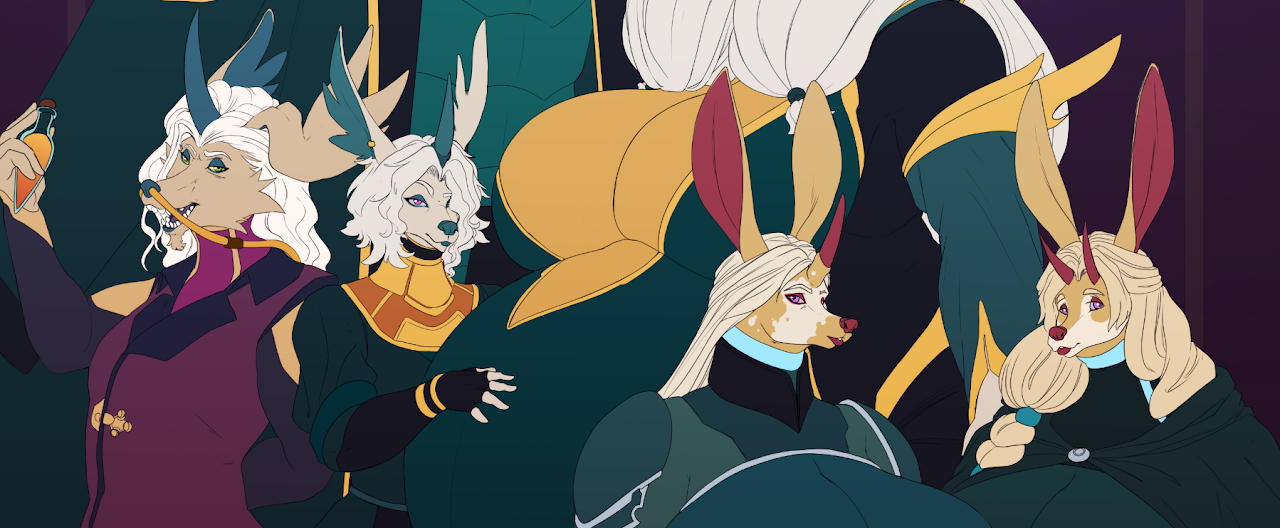
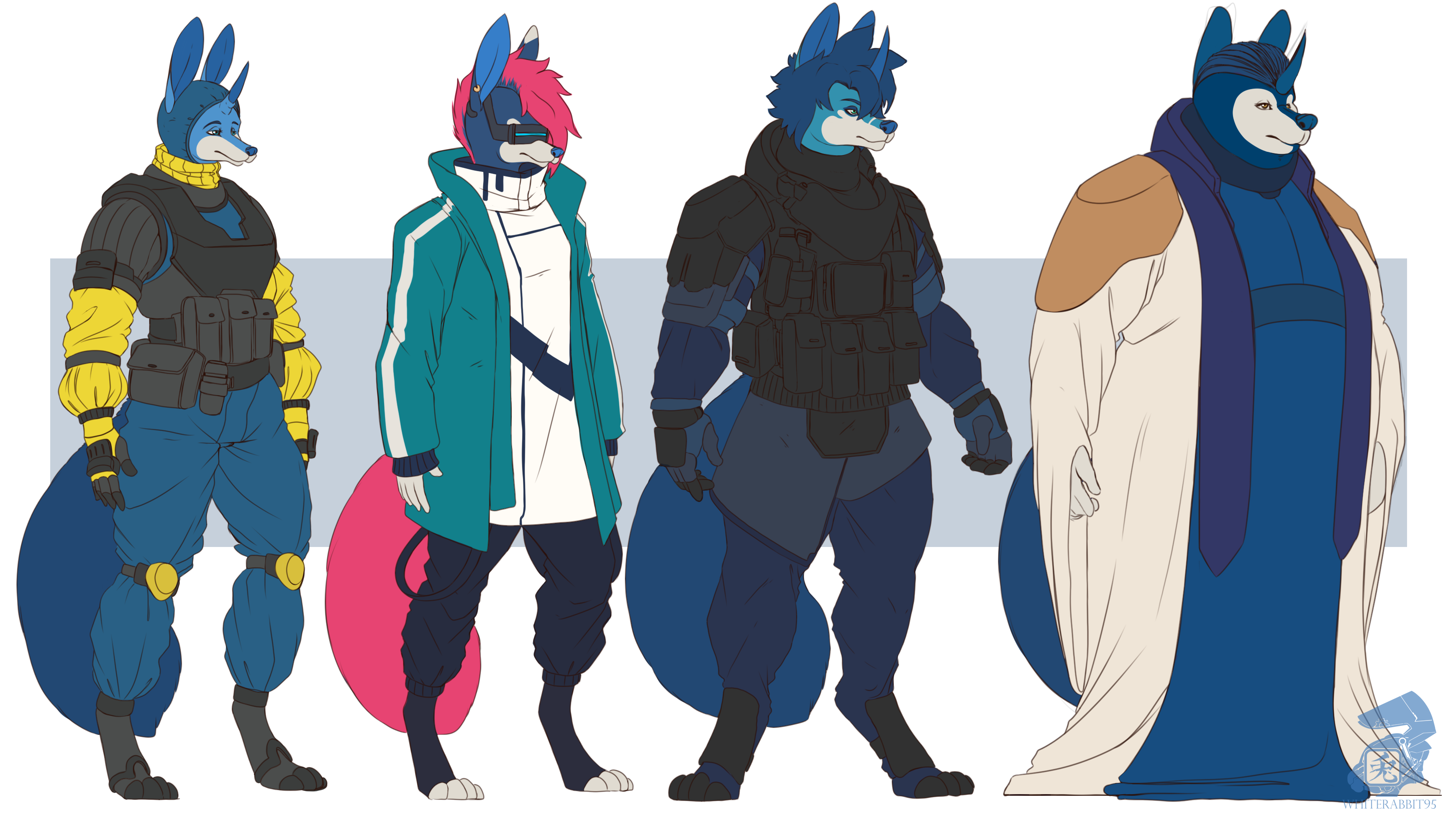
Are an ancient race of canid aspect and androgynous aura, whose ethereal beauty and arcane wisdom have made them, through countless generations, living symbols of nobility, poisoned by pride. Their legacy, wrapped in opulence and forbidden knowledge, stands atop a foundation of decadent splendor.
During the infamous War of a Thousand Years, the Decoluxis fractured into a handful of rival Houses, each devoted to an extinct virtue. Since then, their internal conflicts have never ceased. What began as political strife evolved into a perpetual dance of intrigue, broken oaths, and backstabbing murders.
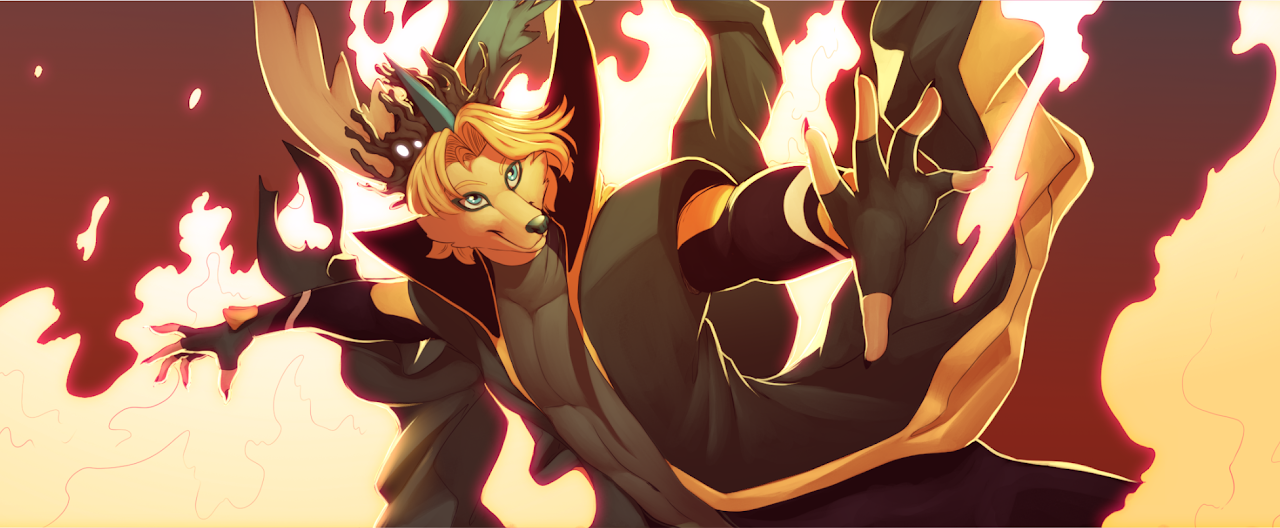
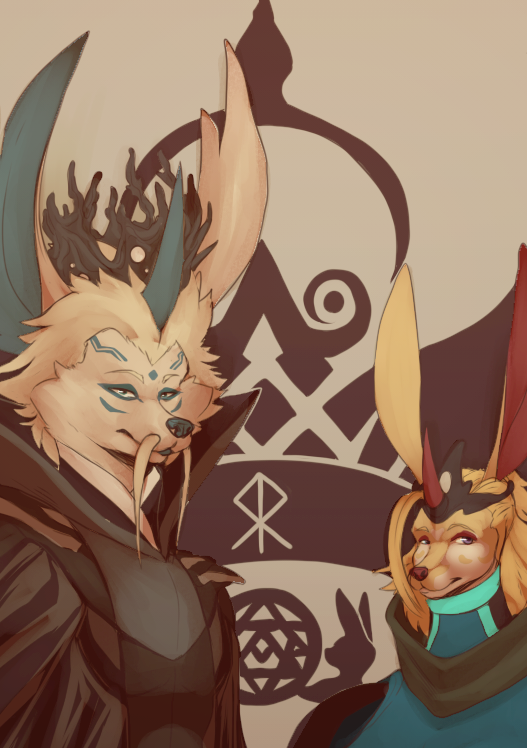
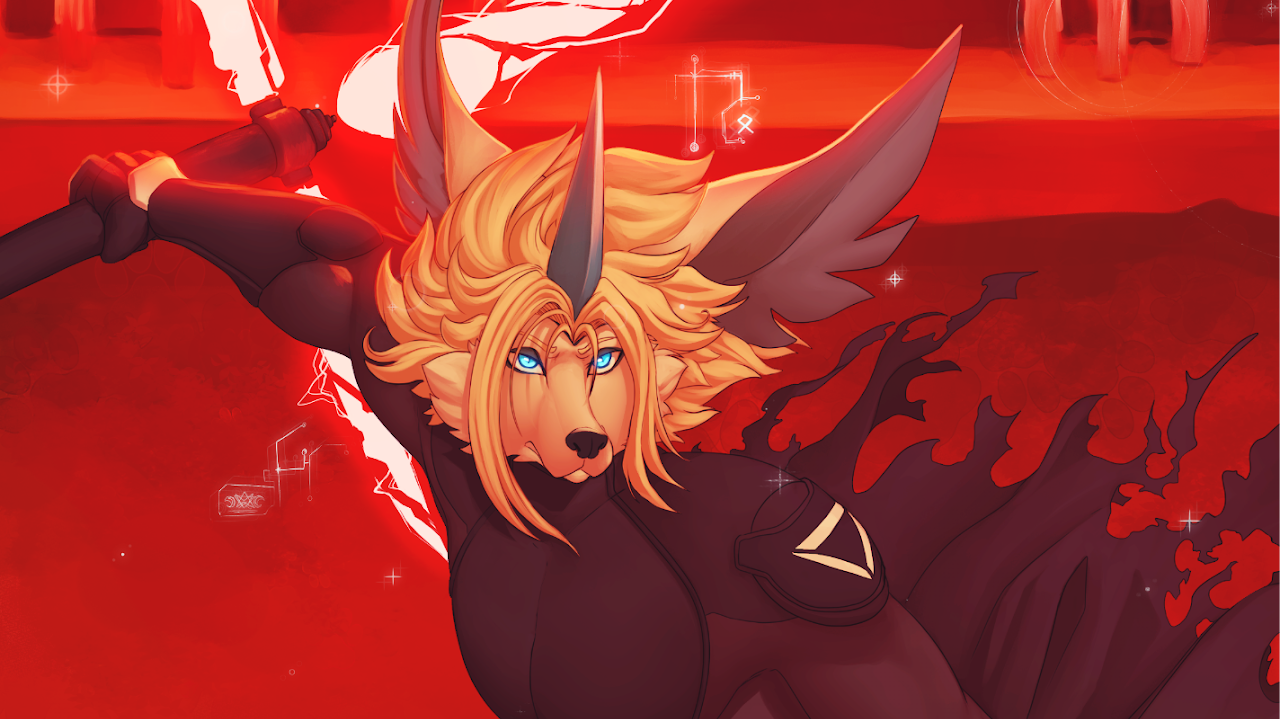
Their bodies, slender in form with wide hips, are covered in an ultra-fine coat of feather-like filaments each strand a microscopic plume, soft as silk. From their heads flows a golden mane, versatile as the wind and radiant like aged gold. Their facial structure is elongated and elegant, with a refined snout, powerful jaw, and eyes blue as dying stars or the deepest ocean. Atop their heads rise two massive wing-shaped ears, living crowns that tremble subtly with every sound. Most bear a pair of wings that allow them to soar across the frozen skies of Gelidium.
Their eyelids resemble those of Terran humans, giving them deeply expressive gazes though to some, these eyes reflect souls rotted by narcissism. Their semi-digitigrade legs grant them a graceful yet predatory gait, while their arms, roughly Terran in proportion, end in bluish claws that shimmer with an iridescent hue. Their plumage often takes on golden or ivory tones with hints of blue, while the skin beneath is a deep, starless blue.
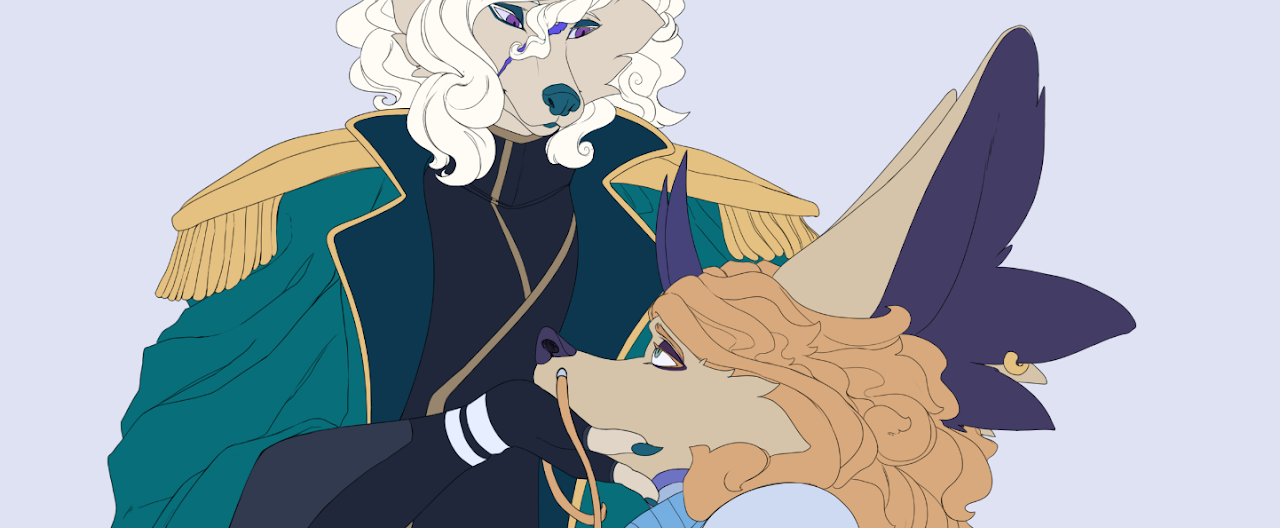
A rare and feared branch of the Decoluxis considered heretical by some Houses, incandescent purple eyes, white hair and coppery plumage.
✦ Gifts of the Rune of Power:
✦ Gifts of the Rune of Power [Bleeding]:
"The Devourers. The Bitches of the Crown. The Bastard Daughters of War."
A mutated sub-race from the Vulparesu bloodline, born beyond the margins of logic and sculpted by centuries of martial tradition. Their origin is a genetic mystery, perhaps the whim of a belligerent goddess or a genetic aberration blessed by necessity. Rare, feared, and revered, the Biatencambis are the living embodiment of absolute physical power.
Raised from puphood by noble houses, they are indoctrinated to become faceless zealots: enforcers of royal will, living weapons, clawed shadows deployed when all else has failed. Their presence signals the end of all negotiations, and the beginning of extermination. Where a Biatencambis steps, rarely does any witness remain.
Despite serving as both shield and spear of the crown, the Biatencambis live under a regime of total control. Though granted certain privileges, better quarters, quality food, or the right to wear holy armor, they are denied anything that might awaken a sense of self: they are forbidden from procreating without royal sanction, from forming emotional bonds, or from aspiring to any title beyond that which war grants them. They are living tools, not citizens.
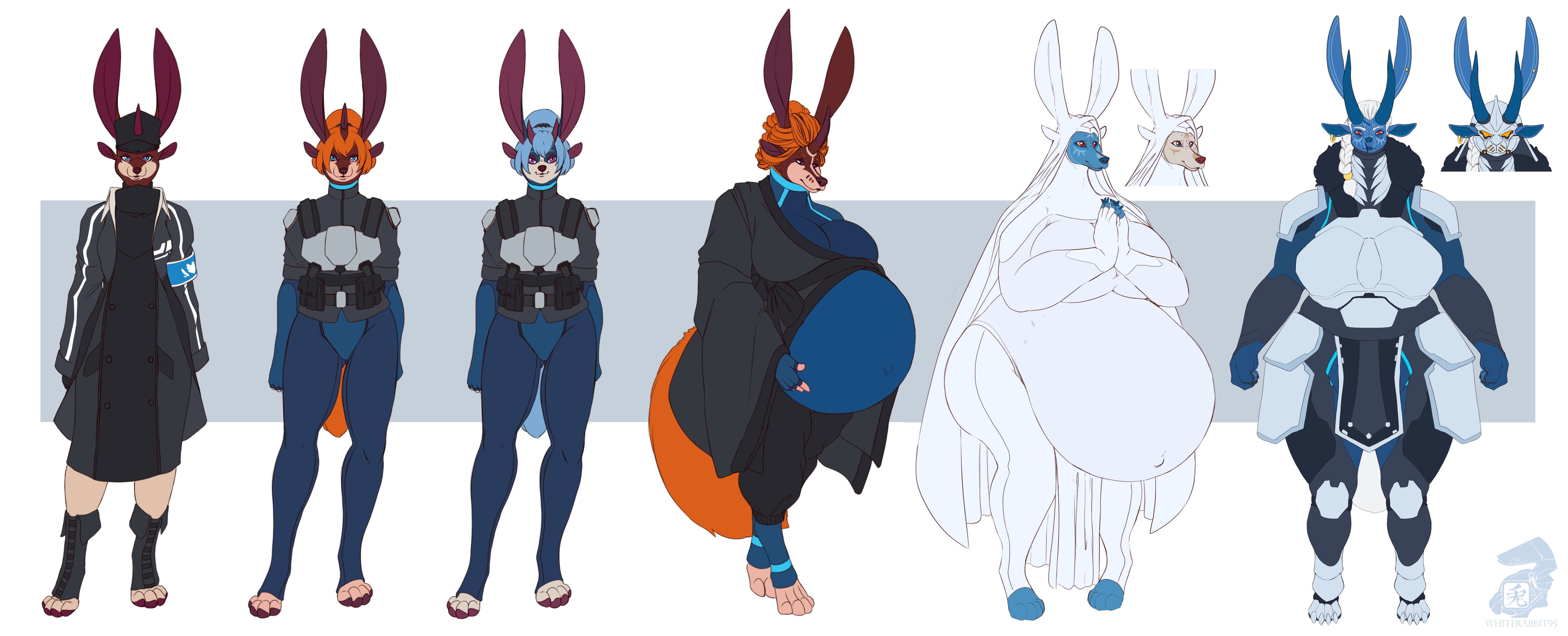
Nonetheless, their instinctual heritage sometimes overflows their oath. Many break their celibacy and conceive in secret, often following illicit encounters with nobles they once vowed to protect. These forbidden offspring are hidden or, in more severe cases, handed over to the Academic Ministry for elimination.
When a transgression is discovered, the purge order is issued by their own sisters in arms, those who trained alongside the deserter, who must carry out the execution. No trial, no mercy. They must kill the traitor and her offspring with their own hands. To refuse is to forfeit their oath and share the condemned’s fate.
Unlike the Decoluxis, whose splendor is tied to nobility, grace, and beauty, the Biatencambis embody the physical apex of their species in a far more brutal and pragmatic form. Their bodies, though outwardly sturdy and plain, conceal dense and lethal musculature built for endurance and destruction. They are covered in bluish or reddish scales that act as natural armor, spreading over key anatomical zones to enhance their resilience.
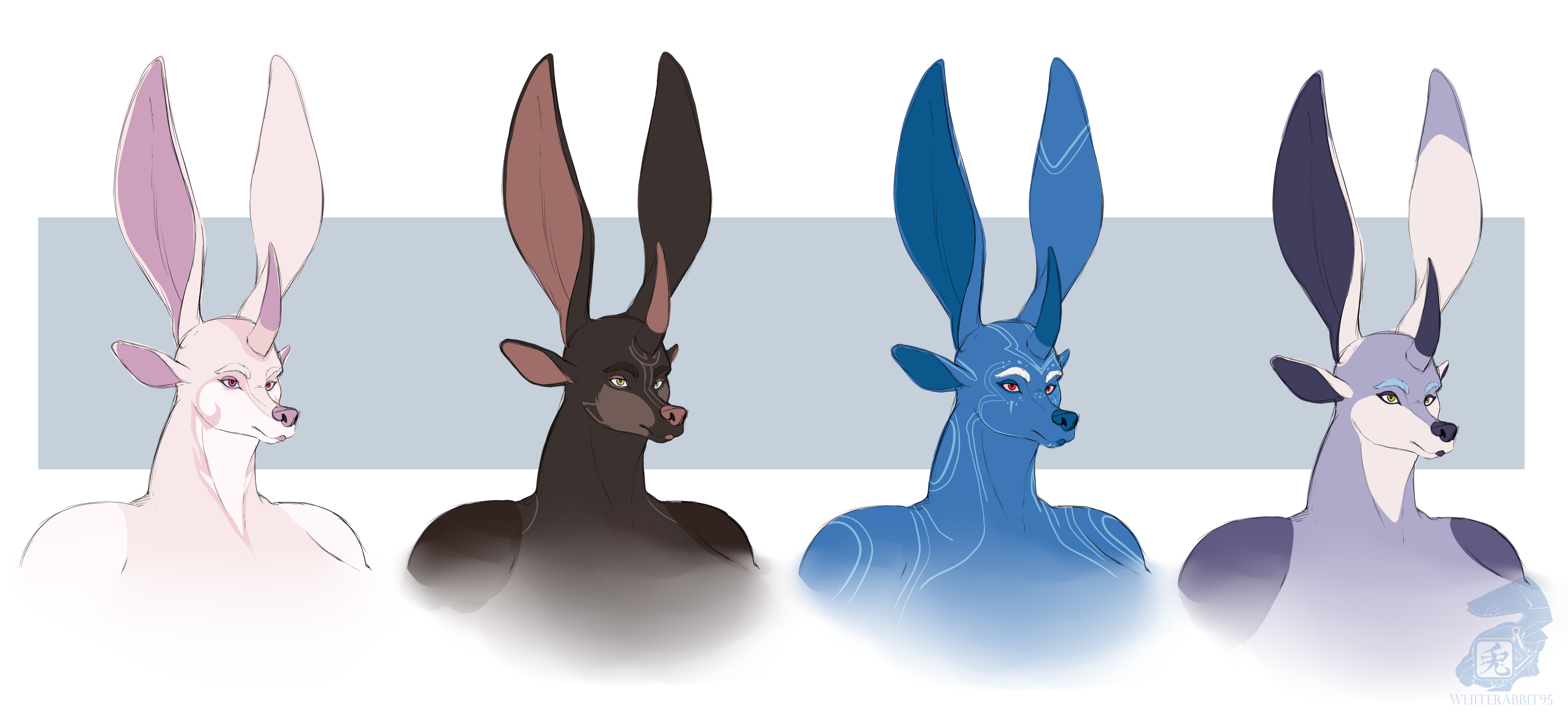
Skin Variants And Scale Styles
Despite their mutated nature, they retain some aesthetic traits of their Vulparesu lineage, pastel toned skin, a large fluffy tail absent in their ancestors, and a variety of single or double horns. Along with long hair that ranges from fiery orange to deep crimson or scorched gold. However, what truly sets them apart are their four ears, arranged in two sensitive pairs that allow them to pick up sounds from kilometers away. This is paired with adaptive eyes capable of detecting movement in darkness or spotting a hidden target in the brush as though it were fully exposed.
TA Biatencambis can range in size from two meters to, in the case of elite individuals born from forced selection cycles, up to four meters tall. The largest among them are said to be able to break down walls with a single charge, tear a Terran in half with their claws, or devour one whole by unhinging their jaw in a serpentine manner. Their mouth, typically hidden beneath a calm or vacant expression, can unfold into a nightmare of fangs designed to crush bone and metal alike.
Even a careless shove from a Biatencambis can send an opponent crashing into a wall with lethal force. They are natural-born hunters, as a rule. They feel no fear. Show no mercy. And rarely miss a strike. Though not known for academic intellect, they possess a sharp oral memory and a deep love for myths, legends, and war stories. This passion for spoken history makes them surprisingly expressive, especially in closed circles.
They are maternal. Deeply so. Capable of a dangerous tenderness, they form emotional codependencies that can become unbreakable bonds or tragic inevitabilities. This duality, ruthless brutality in battle and emotional attachment in the personal is what makes them both monstrous and profoundly loyal, which is why Gelodian males are often tempted to court them.
✦ Gifts of the Rune of Fertility:
✦ Gifts of the Rune of Fertility [Bleeding]:
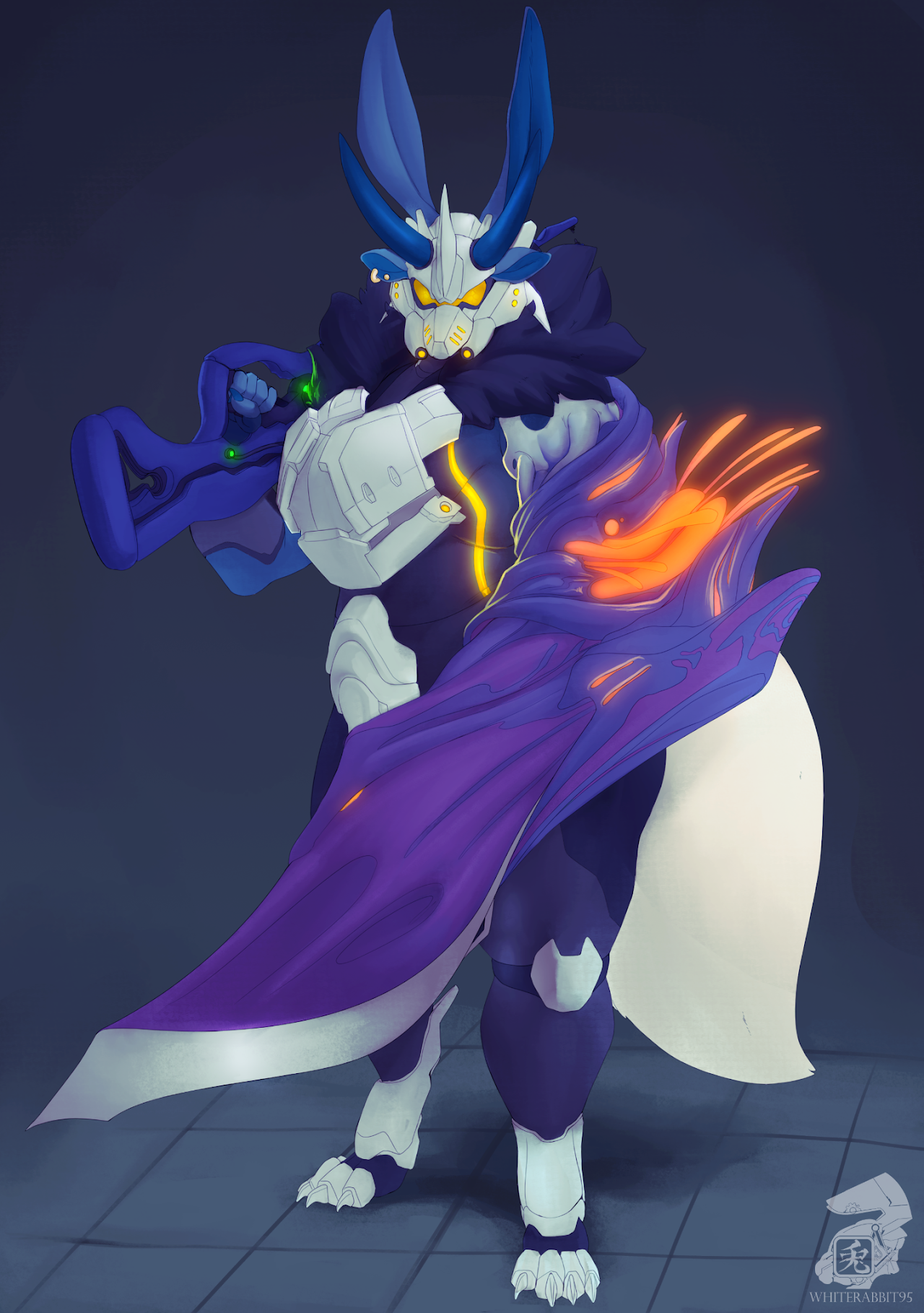
Biatencambis with military life
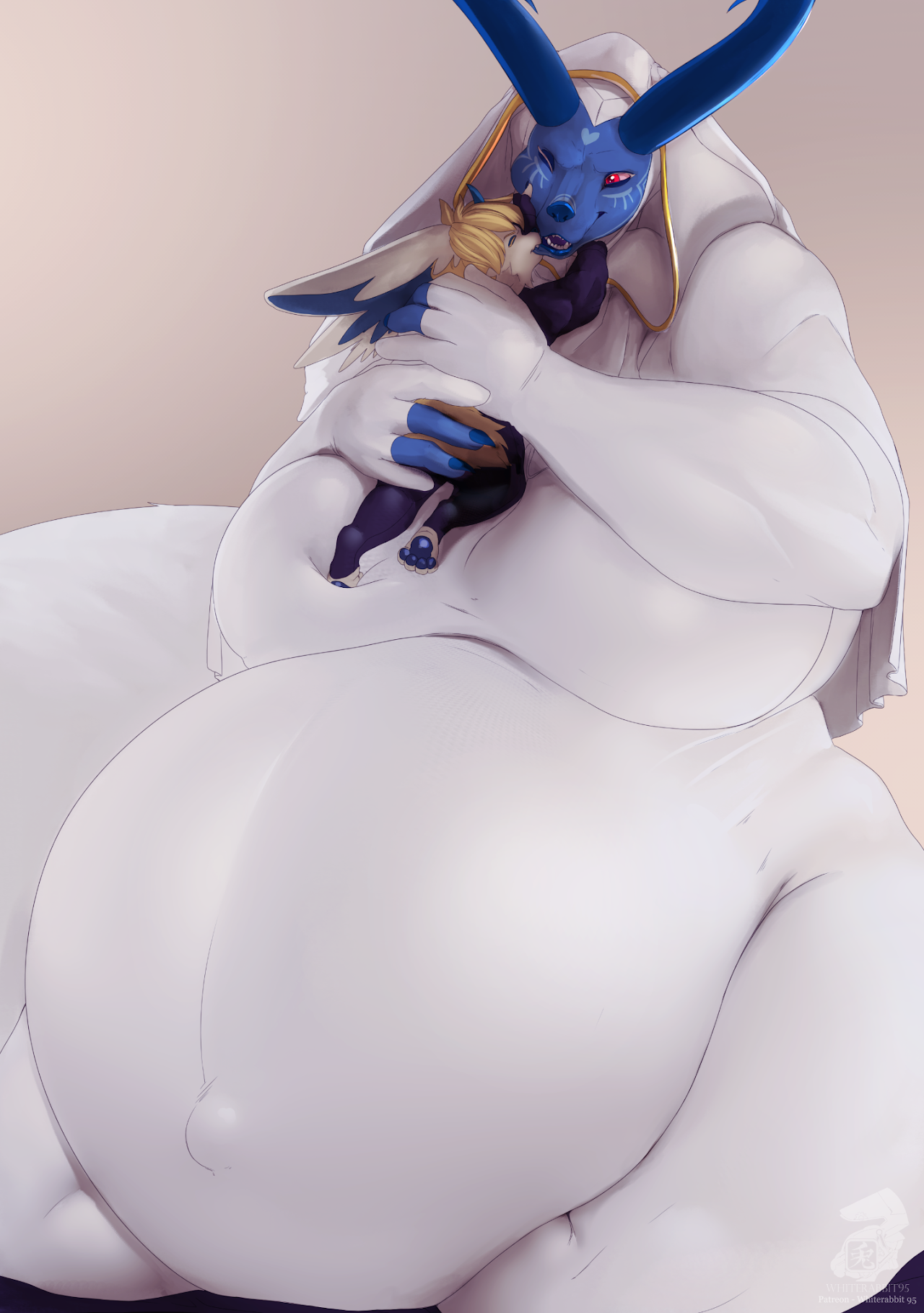
Biatencambis with unauthorized civil life
The Vulparesu form the basal race of the Gelodian species.
With bluish, greasy skin and wiry, unimpressive bodies, they were not shaped for grace, but for endurance and survival. Hardened arms, reinforced legs, backs burdened by centuries of obedience, and a short, bony tail. Two pairs of ears. Engraved into their marrow is the Rune of Strength, one that robs them of magic but grants them resistance to cold, pain, and exhaustion.
They are born in litters of two or three, gestated in barely nine months, as if the world were in a hurry to burn through them. Within weeks, they walk. In days, they carry weight. Before a full solar cycle, they can already form words. Their lives last between 50 and 80 years, if they're lucky enough not to be crushed in a forge, buried in a battlefield, or lost in a tunnel that will never see daylight.
They are not called slaves. But they need no chains to obey. Faith cages them. Purpose justifies them. That’s why they are known as the useful herd: born, serve, collapse. And the Crown knows it. Every tower, every building and home, every mine drilled into the world’s marrow, every colossal ship that crosses the frozen skies. Was built by their hands. That’s why they’re feared. That’s why they are forbidden from carrying weapons within the cities. If one day they chose to stop obeying, the Throne would fall with them.
Enough reason to grant them just the right amount of freedom to keep them distracted, immersed in consumption and base desires, as long as they stay obedient. Every Vulparesu is registered, watched, categorized. They are fast. Social. Trainable. Perfect cannon fodder. They respond as a pack. They don’t question the purpose and their obedience is a conditioned reflex from birth.
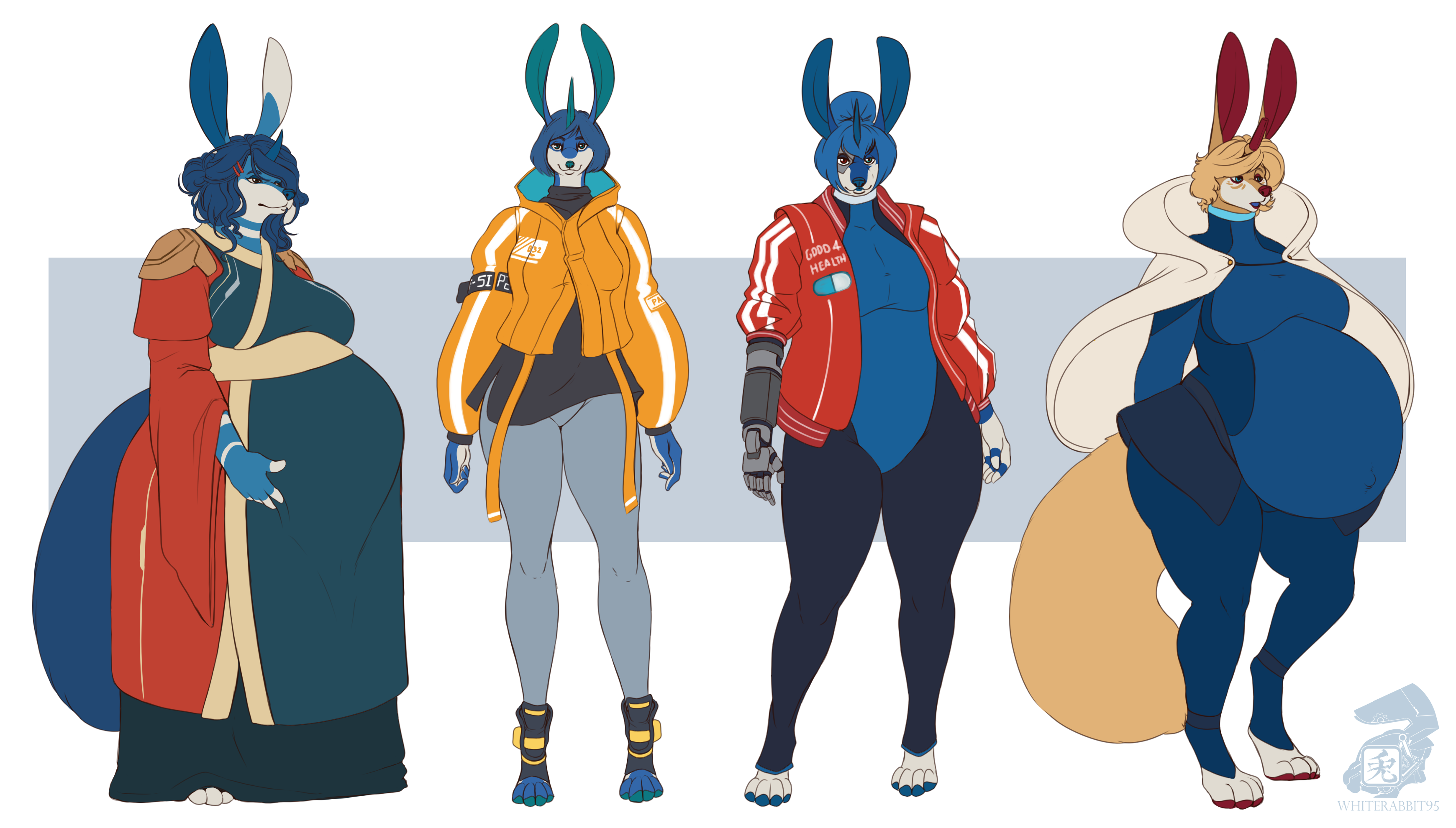
If a Vulparesu is born golden, she ceases to be a daughter. They are the second sub-race to branch from the Vulparesu, unlike the Biatencmabis.
Goldenresu are said by hushed tongues to be divine errors. Smooth, pale skin etched with golden patterns and blood-red markings, as if painted with Terran blood. They are larger. Longer-lived. More coveted. And the most strictly controlled. Their existence is a genetic mutation, an evolutionary vortex.
They have a single biological obligation: to birth Decoluxis, the male elite of the Kingdom. From their first cry, they are stripped of the right to know their parents, especially when born into the kingdom’s lower houses. No mother steps forward. Soon after, they are taken and assigned to a wetnurse within the Church of Silver, who determines their role for the years to come.
Those born of noble blood are trained like glass ornaments: Dance. Protocol. Silence. While they often enjoy greater privilege, most are dressed as offerings handed over as trophies. Others, however, exploit the very system that birthed them. They rebel under the illusion of freedom, built by their own kind. A game of influence, one often orchestrated by themselves.
Some end up in aristocratic beds. Others, paired with Royal Guardsmen, in unions often rewarded more for function than for desire. They can give birth once a year.And they do. Sometimes in religious ecstasy. Other times, through screams of hatred and resentment. The saddest truth is: not all their offspring survive. Some are born missing organs, with collapsed minds, or broken immune systems. If not born into noble lineage and deemed unfit for strength, they face three paths: Sacrificed. Assigned to a lower caste. Or conscripted into the Royal Guard, where it’s unlikely they'll ever know their progenitor or their siblings.
✦ Gifts of the Rune of Strength:
✦ Gifts of the Rune of Strength [Bleeding]:
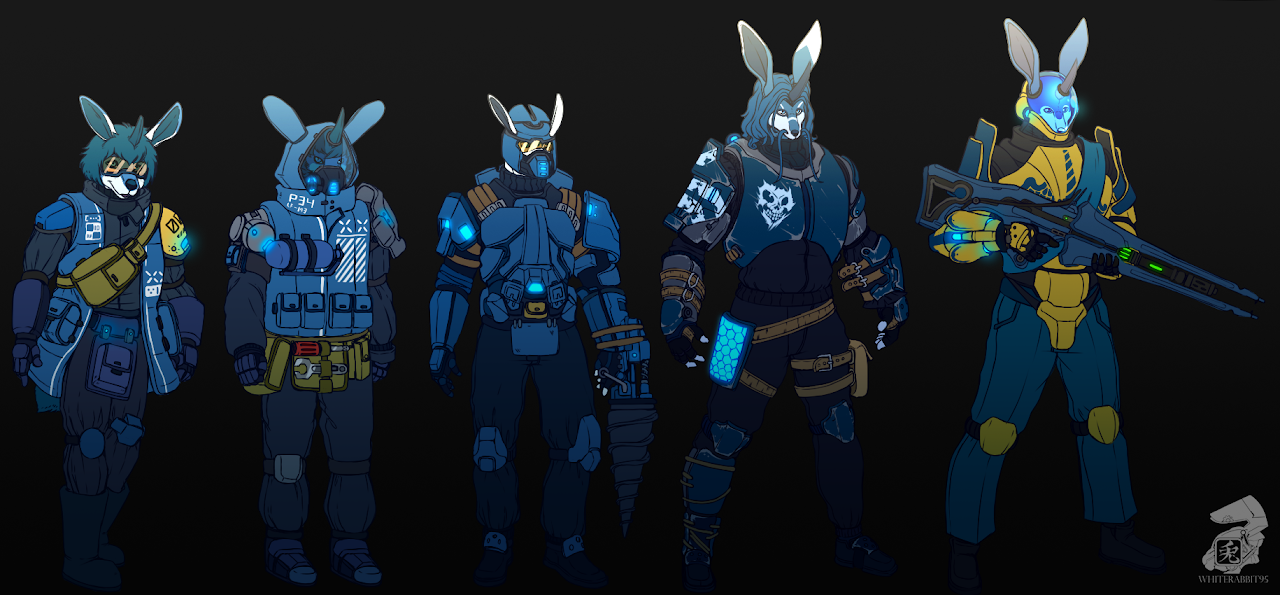
Miner and Civil Concept Art
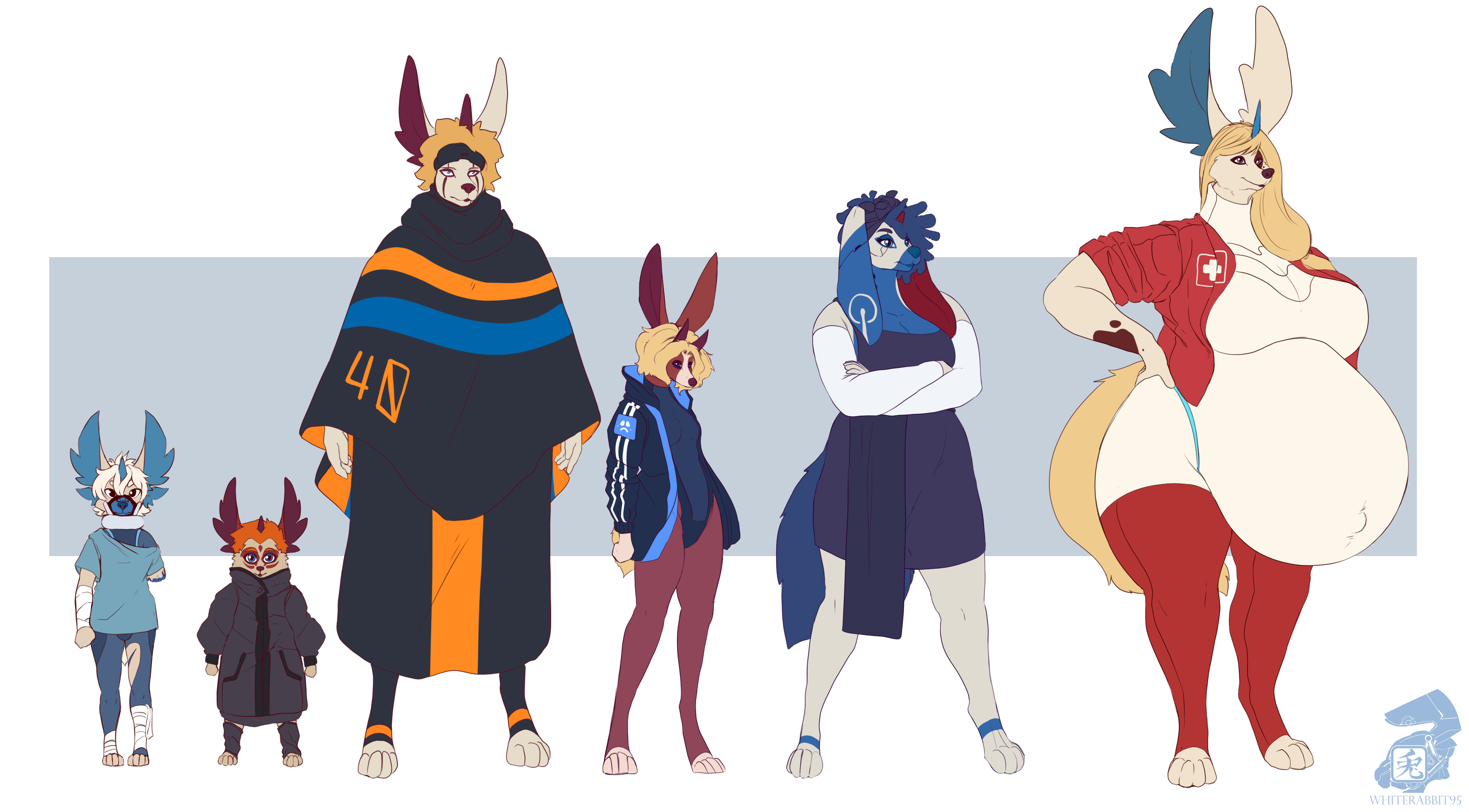
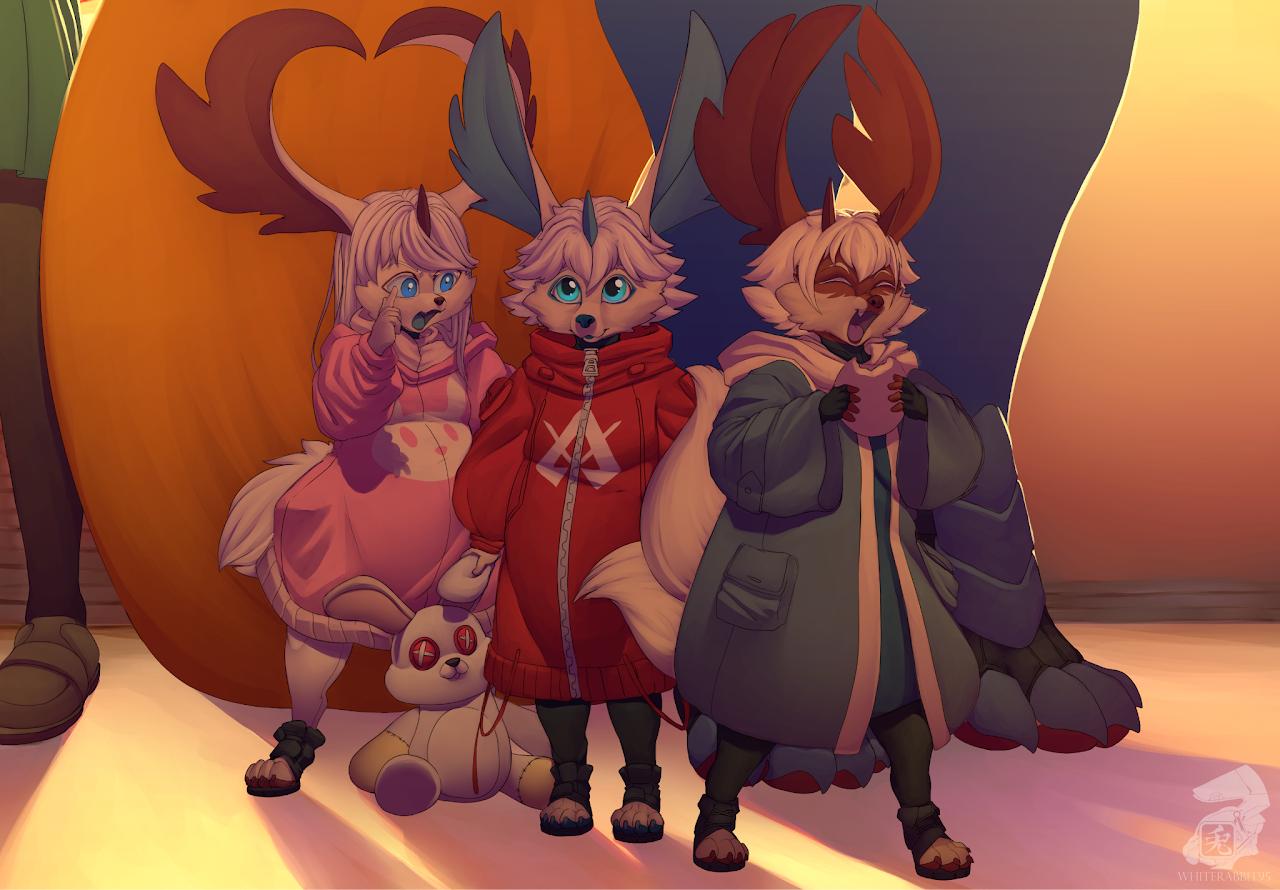
The forbidden offspring of a Biatencambis and a Decoluxis.
Their gestation lasts a full two years. During that time, the mother develops a neuro-arcane bond in the frontal lobe, so deep that basic needs become very intense and indistinguishable. Hunger, fear and comfort are shared, making the mother more emotional and sensitive.
A Biatencambis may give birth to one or two cubs in her first pregnancy. As she matures, her births become more abundant: between six and twelve offspring throughout her fertile years, sometimes more in rare cases. But abundance does not mean quality. Lumens do not reach independence until after the age of seven, and without their mother, they do not survive.
Their emotional dependence is almost symbiotic. Their mother's presence not only calms them, but keeps them alive. Without her, they collapse and die. Their cries can cause hallucinations, and their mere agony is known to trigger “guardian syndrome,” a psycho-magical phenomenon that turns even natural enemies into protectors.
Due to their mixed nature, Lumens exhibit a range of traits: winged ears, skin that shifts between scales and feathers. Their voice is soft, almost hypnotic, and their bodies show no clear sexual dimorphism until after puberty. They are often mistaken for Decoluxis, though sometimes their excess horns reveal their lineage. Some males inherit the warm, sturdy build of their mothers; some females the slender figure of their Decoluxis fathers. And in some unfortunate cases, they grow extra limbs, three arms, two tails, or more.
Lumens are living generators of raw arcane energy. Many are born without defined channels, without limits or control. They manifest arcane crystals prematurely and when that happens, their bodies may tear apart from within, causing spontaneous mutations, degenerative diseases, or even minor dimensional fractures that consume them. Few survive past the age of three. But those who do… there are no words to measure their true potential.
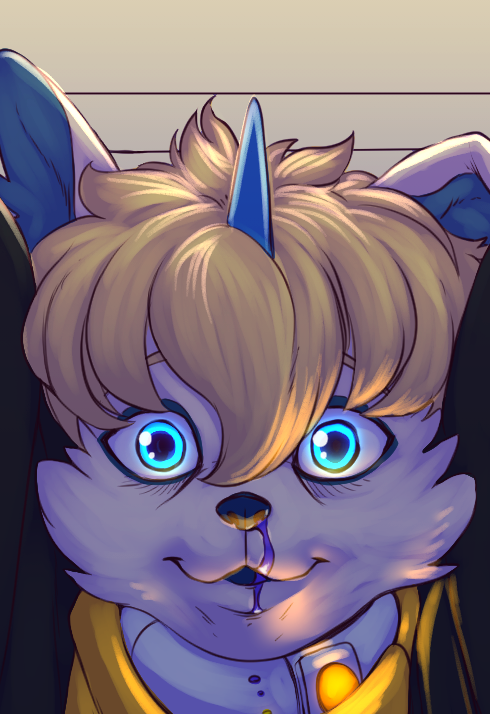
There is a brutal method to ensure their survival. If they’re allowed to live at all. The RC-2 Suppression Collar: a cold metal ring with a red crystal used as a dispersal battery. This device weakens them, reduces their arcane pulses to a minimum, and, in the event of unauthorized activation, delivers a shock directly to the thalamus, reminding them in agony never to use their gifts. In extreme cases, the collar can kill them. On many planets, their existence is illegal. As soon as one is detected by a Biatencambis from the academies, an extermination order is issued. They have no right to education, healthcare, or citizenship.
All this hatred has a source. During the Golden Age of the Gelodian Empire, under the rule of the last monarch of House Lumis, the Lumens were raised to near-divine status: incorruptible soldiers, powerful diplomats, living pillars of arcane might. But they were too chaotic. Too unstable. No one knows for certain what happened, only that blame fell upon the Lumis. Accused of opening the Darvase Gate and start the infamous Thousand-Year War.
Some noble houses consider them a degenerate, unthinkable mistake. To the Church of Silver, they are an error. A sin. A blasphemy against life itself.
✶ Gifts of the Rune of ?̸̞̘̒̓͘?̴͓͖͕͒̽̚?̵̡̠̫̓͘::
✶ Gifts of the Rune of ?̸̞̘̒̓͘?̴͓͖͕͒̽̚?̵̡̠̫̓͘ [Bleeding]:
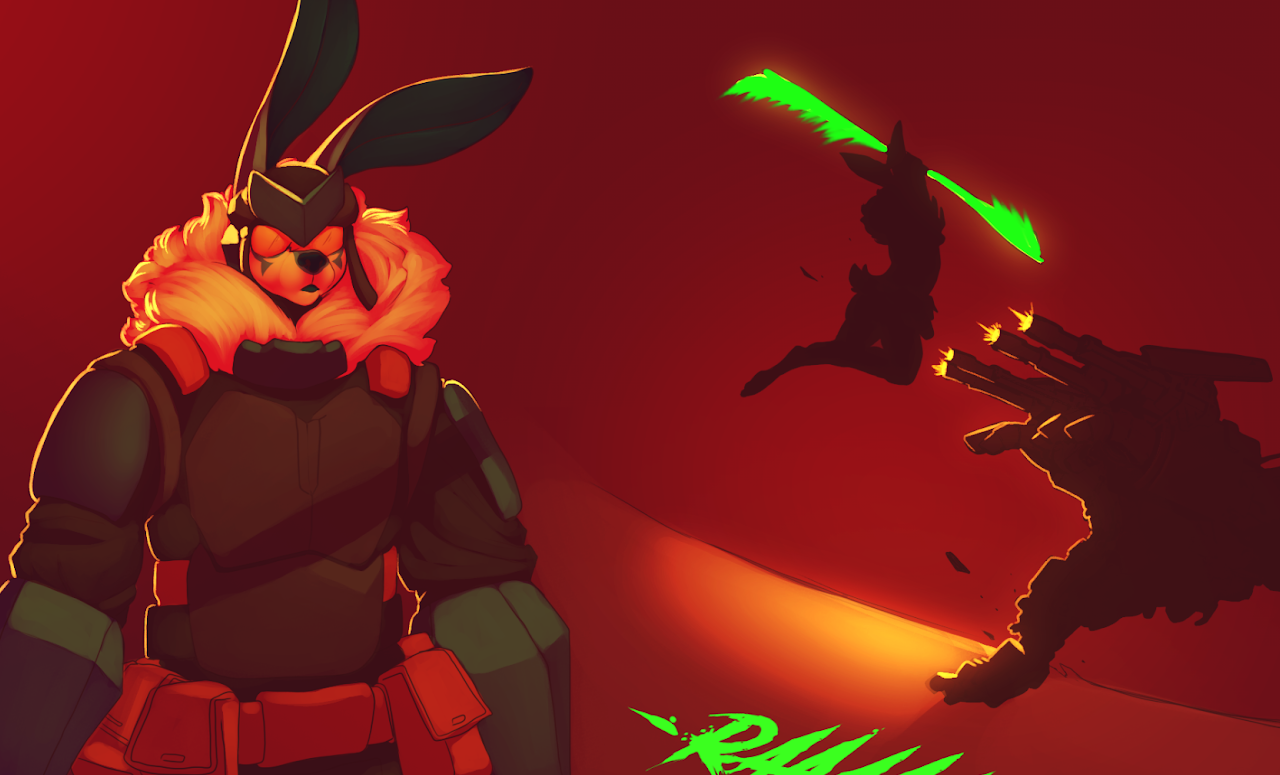
are the waste of flesh. Defective hybrids born from the union of a Biatencambis and a Vulparesu. They were never meant to exist. They are the perfect error of hybridization. Unlike their mothers, Badbloods can be male, and though they inherit the abilities of their lineage, they do so in an atrophied, unstable, or purely symbolic state.
Their bluish skin and hollow eyes betray them. They age rapidly, their bodies wearing down as if time itself loathed them. No rune has ever fully claimed them, and they cannot sire life. They are not recognized as citizens like their Lumen cousins.
Yet, unlike the costly and impractical nature of controlling a Lumen, the Kingdom of Gelidium, in its wise cruelty, found a purpose for them.
Badbloods are deployed into the most primitive and disposable shock units of the Coalition of Nifelhaim Realms, where their sole purpose is to advance, strike, absorb, and fall. They are not trained. They are not taught. They are simply pointed toward the enemy and given a reason: "they took something from you." Sometimes, not even that. A glance is enough. They respond with laughter, drool, and euphoria, as if violence were their only friend.
Due to their mixed nature, Lumens exhibit a range of traits: winged ears, skin that shifts between scales and feathers. Their voice is soft, almost hypnotic, and their bodies show no clear sexual dimorphism until after puberty. They are often mistaken for Decoluxis, though sometimes their excess horns reveal their lineage. Some males inherit the warm, sturdy build of their mothers; some females the slender figure of their Decoluxis fathers. And in some unfortunate cases, they grow extra limbs, three arms, two tails, or more.
Most Badbloods live barely a few decades, and in their final days, they seek death as if it were a prize. Some volunteer as suicide minions; others sell themselves as hitmen for noble houses too proud to stain their hands with “official” blood. It is rumored that certain lords even collect the skulls of particularly brutal Badbloods as trophies from assassination attempts they've survived.
All the abilities of the Biatencambis, but in a very poor and impractical form.
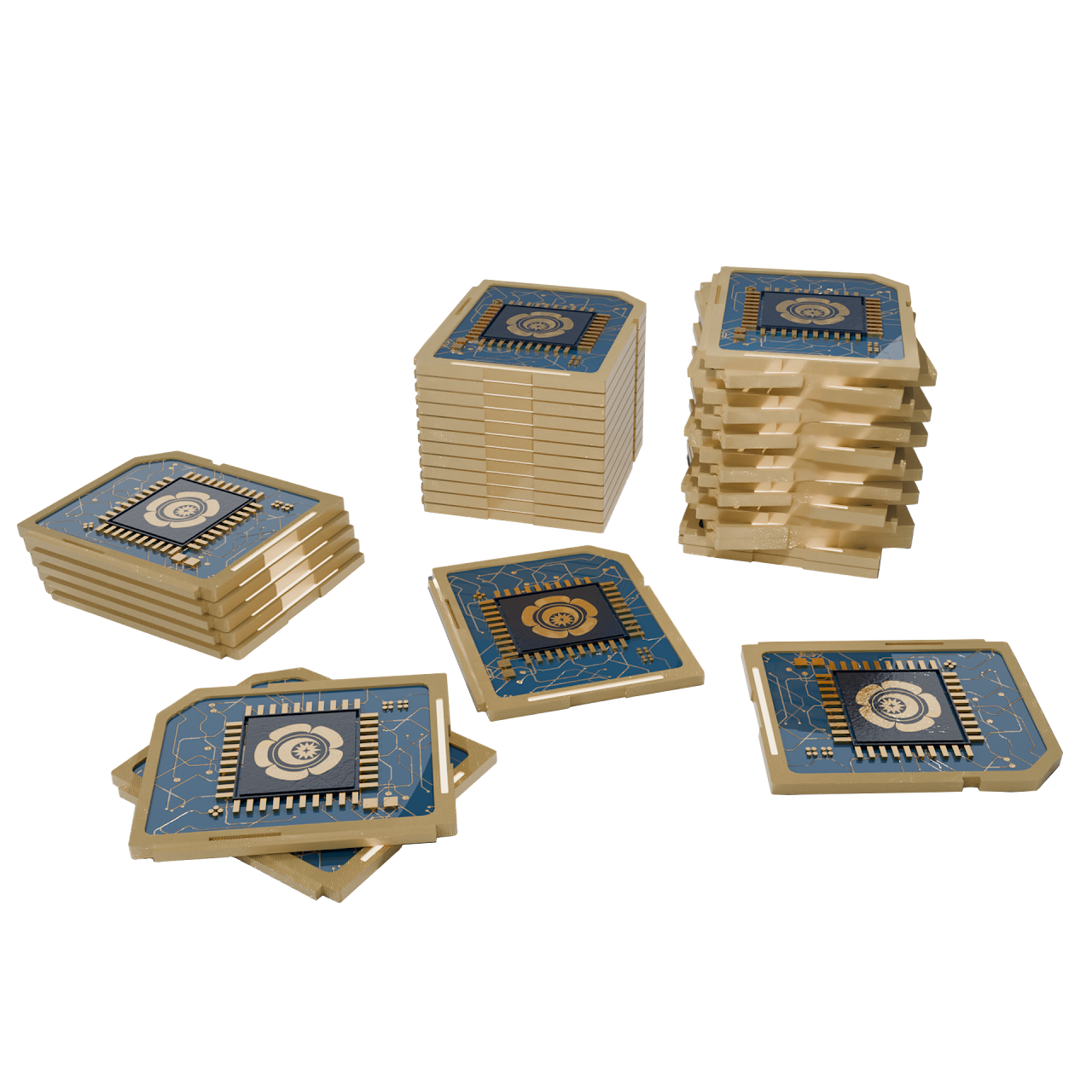
The Gelodian Credit, also known as the Monarchic Credit, is the most widely used currency within the CRN (Coalition of the Realms of Nifelhaim). Its value is directly backed by monarchic production, meaning the labor force, lands, and energy resources controlled by the Gelodian Crown.
The Bank of Zhongaria strictly regulates its issuance, relying on export revenues, mainly rare minerals, amber crystal, weapon manufacturing, and military base construction to neighboring worlds in order to accumulate reserves. However, this economy reveals deep structural vulnerabilities.



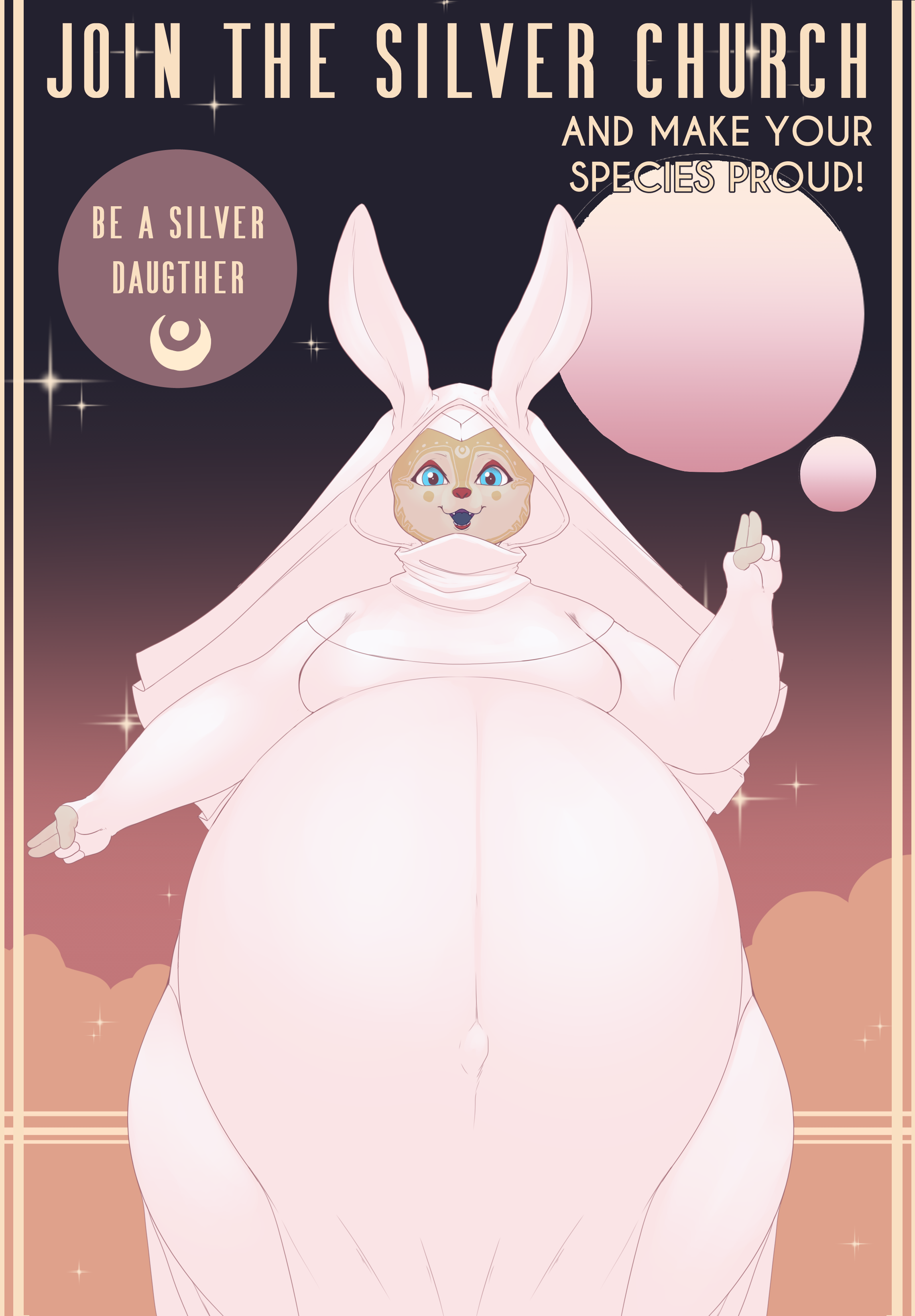
The Silver Church welcomes every Gelodian who chooses to devote themselves to the Goddess of Fertility, to serve her will and spread her word and creed throughout the realm.
Is the official religion of the Gelodian Kingdom, and its worship centers on the veneration of Avathoth, a female deity depicted as a maternal and eternally pregnant figure a living symbol of perpetual gestation. Avathoth is considered the goddess of life, creation, and fertility, the divine womb that gave birth to the universe and all forms of existence, including the Gelodian species itself and the sacred Black Crown.
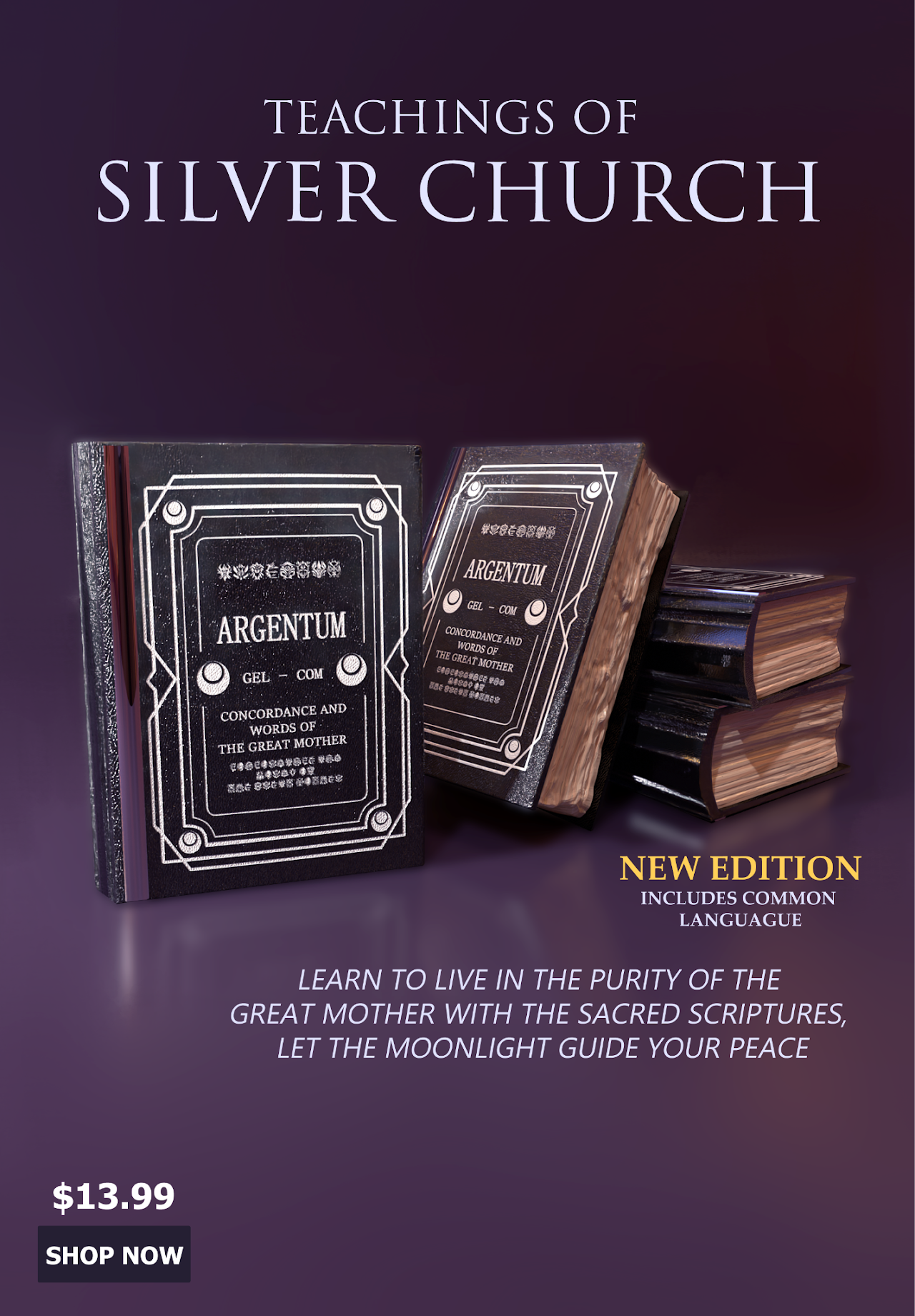
According to the sacred scriptures, Avathoth emerged from the Void but was cast out for rebelling against the chaotic will of that darkness. In her exile, she breathed life into empty worlds and with his breath he shaped the souls of mortals.
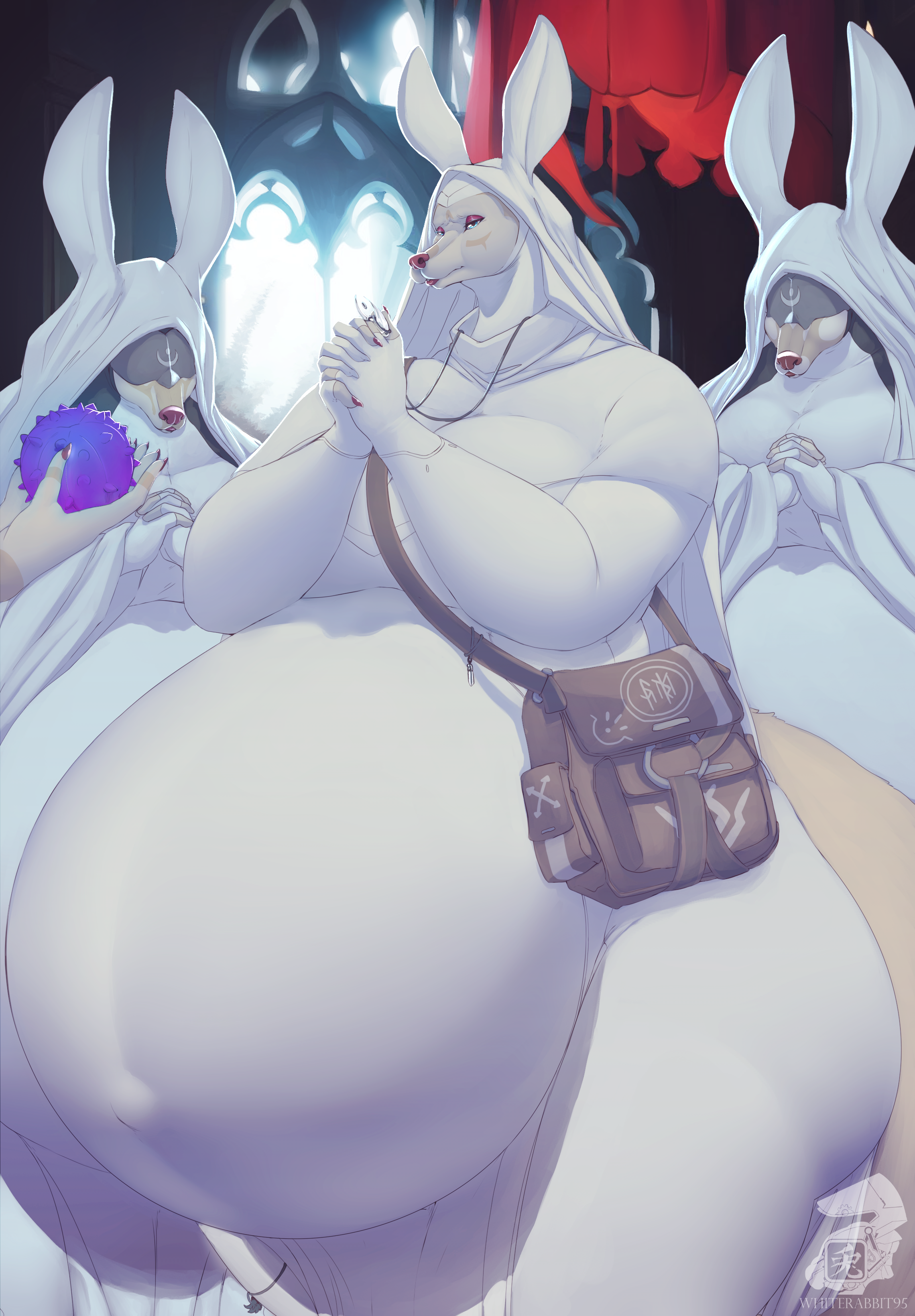
Originally founded by a student of an ancient school of healers with the objective of unifying nations under a single banner, the Silver Church gradually annexed Gelodian castes and other small species as messengers to continue spreading the word of Avathoth and his designs.
Although the church no longer possesses that absolute power, it still controls a large part of political, social, and economic offices and services. It administers hospitals, mortuary services, archives, and civil registries.
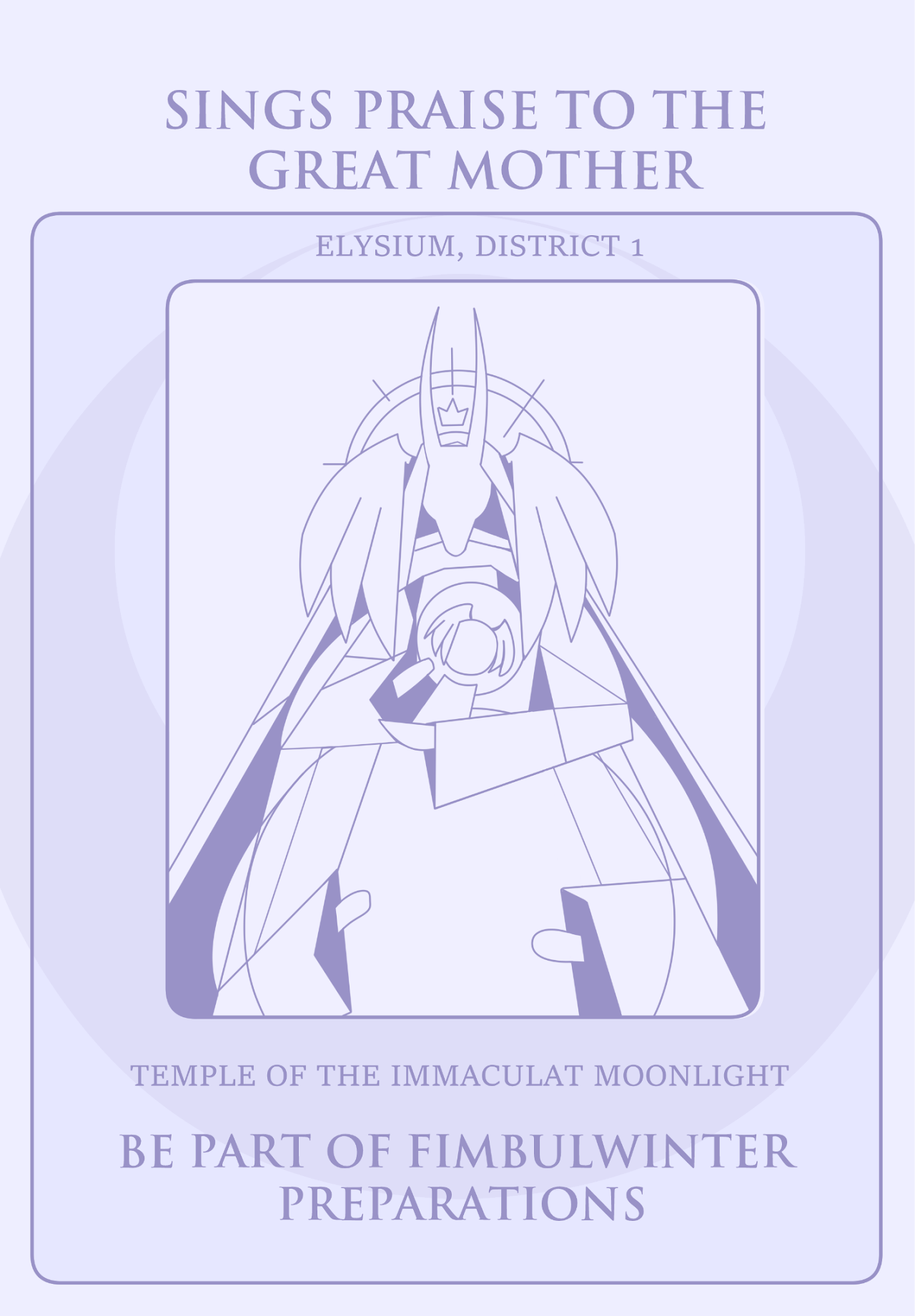
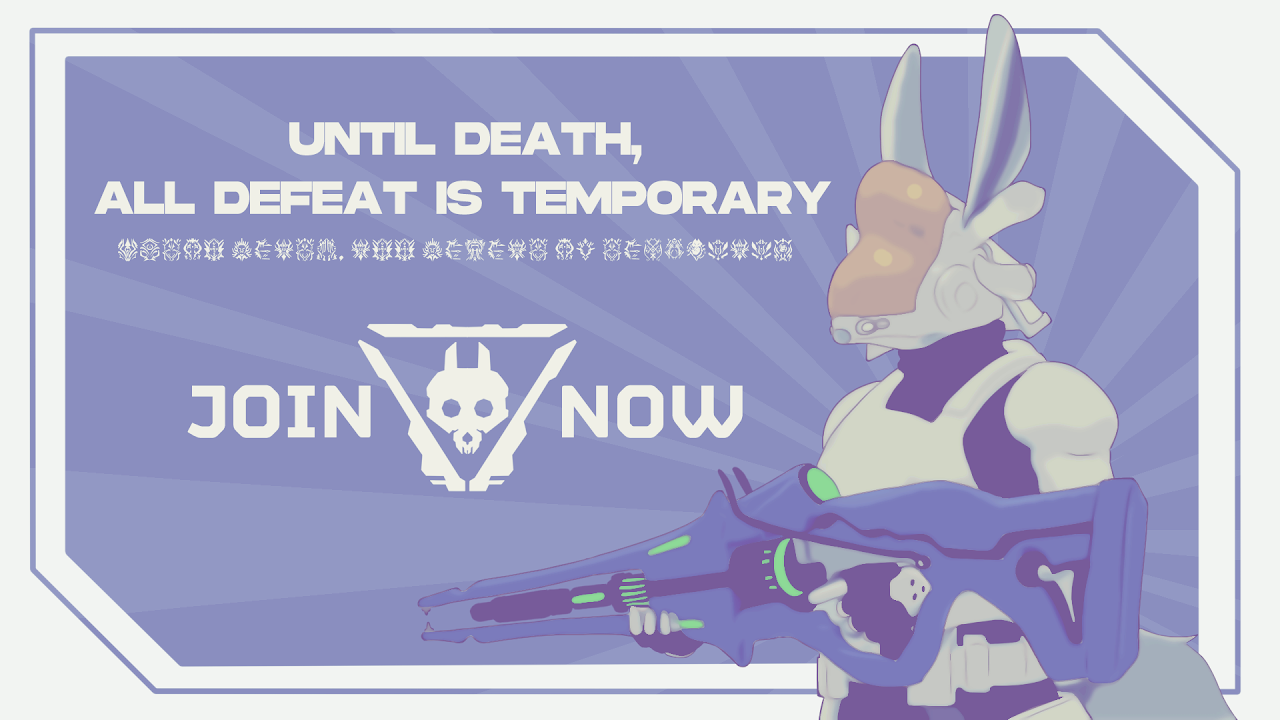
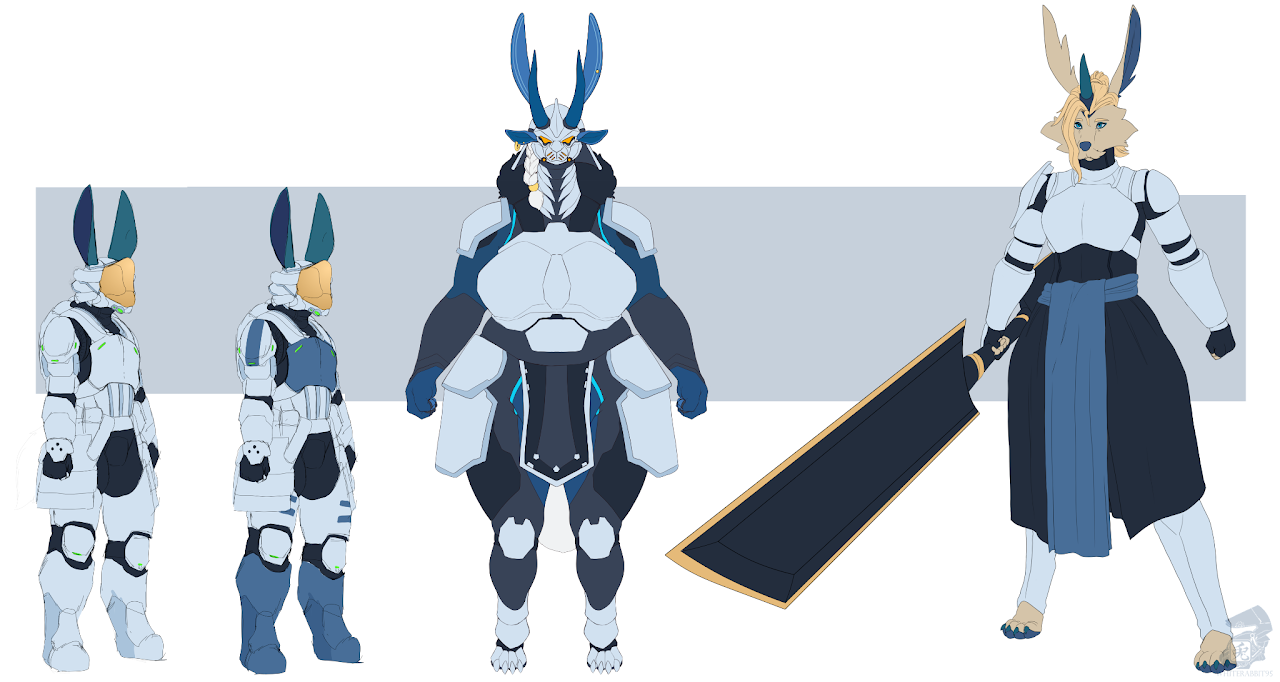
Also known as The Gladii Imperatoris or The Crowns Glave, are the military fist of the Gelodian Realm, sanctified by both the Crown and the Silver Church.
The Gelodian army's function is to maintain peace and control of the crown, protecting allied worlds, deploying entire fleets, and carrying out operations in a matter of hours. It reduces threats from beings of the void, dissidents, rebels, and enemies of the crown.
Although its original purpose was to enforce the dogma of the Silver Church and subjugate worlds, enslaving their native populations and unifying them to their beliefs, the reality is that today it is nothing more than a force of “order” that has been divided into three branches, which are required to be called upon to reunite in the event of war.
They are the flesh and meat of the army. They patrol the streets, guard borders, pilot the warships, cleanse infested districts, and die by the thousands. Vulparesu, Badbloods, and all kinds of hybrids regardless of gender or nature are thrown into these ranks. Some enlist for faith, some for necessity, others out of sheer condemnation.
They are lured with promises of coin and spiritual redemption, but what most truly receive is a grave with no name.
From their first breath, the Zealots are taken by the Silver Church. Torn away from the common world, raised in the so called "Academies", they are sculpted into living weapons of devotion. There is no family. No desire. No self.
Only duty. Only the Crown. They are forged through brutal hand-to-hand combat, tactical warfare drills, and religious indoctrination. Every Zealot burns with the sacred mission to protect the noble bloodlines, to fulfill royal command, and to execute their master's judgment without hesitation or mercy.
They are the final card when all else collapses. Warriors without past or name, once-soldiers who surrendered everything pleasures, identities, even memory to don the sacred mantle of absolute duty. They are celibate by sacred oath, masters of arcane warfare, trained in the arts of annihilation and Void suppression. Their mere presence bends the entire chain of command around them.


The CRN is an “organization” of union, defense, and trade treaties between the various alien races that have integrated under the Gelodian kingdom. It was founded by the Silver Church and the House of Kourin with the official goal of “unifying” the kingdoms during the Thousand-Year War, offering security and autonomous freedom to its members through military, economic, and political cooperation.
Although its original purpose was to be a network of fortified bases and subjugated colonies intended to halt the constant advance of the Nexusterran Empire during the war, each planet and each “accepted” race meant a new world with reserves, resources, and military manpower to sustain the defensive wall of the Gelodian Kingdom.
Although “progress” and “modernization” are offered to the less advanced races that join it, the reality is that it is synonymous with subordination. Every race that joins is bound by the demands of the nobility of the Gelodian kingdom and under the surveillance of the Silver Church. It is challenged by small groups of dissidents. One of the most current intentions is to reorganize the system and “transition” to the so-called High Republic of Nifelheim, a monarchy that retains some power while delegates and chambers administer civil affairs, giving the impression of a more modern and inclusive government.

The Aracniums are pseudo-ursine creatures with features reminiscent of certain primates, such as orangutans. They possess four arms and four eyes, granting them exceptional physical strength tailored for close combat. While they are naturally passive in communal settings, they have a genetic predisposition for extreme aggression, rooted in their origins as territorial pack hunters.
Unlike the Gelodians, Aracniums are attracted to large, overweight males, whom they see as symbols of dominance and power. For them, Biatencambis are considered an idealized, almost mythical female counterpart.
Within the CRN, Aracniums have been reduced almost exclusively to shock troops. They hold no meaningful social role beyond their battlefield utility.
Discrimination against them is so entrenched that the Gelodian Kingdom doesn't even provide them with armor or weapons designed for their physiology. Regarded as crude, slow-witted, and easily manipulated, they are used as living tools expendable cannon fodder.
Their reasoning is comparable to that of a caveman: they grasp basic concepts like “strength,” "sex", “enemy,” and “food,” but are incapable of processing complex orders or understanding advanced hierarchical structures. This limitation makes them useful, yet entirely disposable.
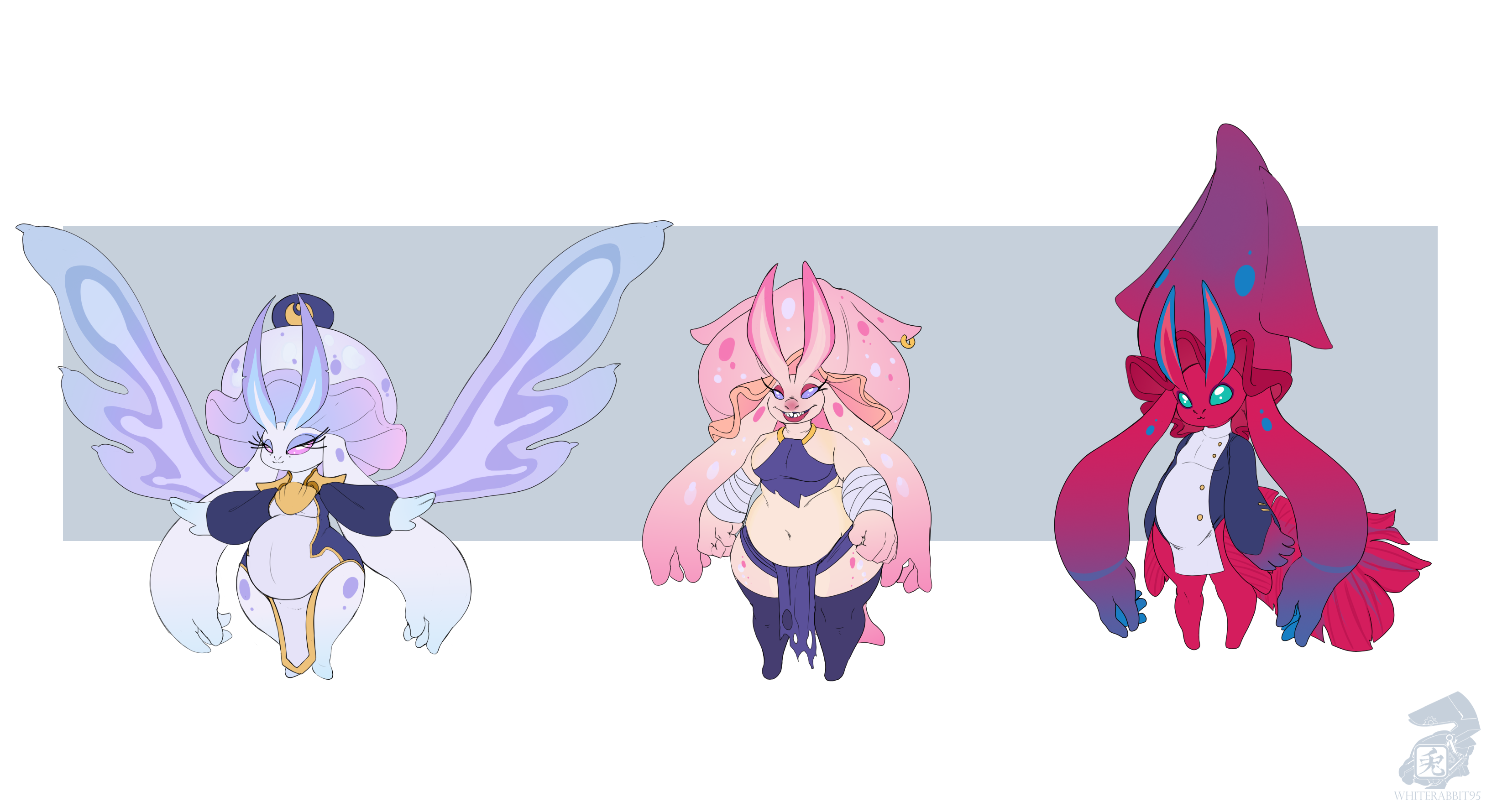
Aquordles are aquatic, fae-like beings, similar to pixies or fairies, with translucent fins or wings that resemble those of fish. Their predominant coloration is white, although they can display a wide range of hues, much like marine creatures.
They possess a fairly solid level of reasoning, making them intellectually capable and strategically valuable. They build their homes among shipwrecks and ruins of ancient structures that have been claimed by the sea. Within the CRN, Aquordles primarily serve as support units: healers and users of reinforcing arcane magic. They are essential in protecting soldiers who lack advanced armor, such as the Decoluxis or the Biatencambis.
Socially, Aquordles live in servile conditions. They are often assigned roles as scribes, assistants, or even bankers, due to their exceptional talent for mathematics. On occasion, they are also used as sexual companions. However, their most prominent role is spiritual. They serve actively in the Silver Church, devoted to the goddess Avathoth, who bears a striking resemblance to an ancient sea deity once worshipped by their species. This connection has been used to further reinforce their religious submission.
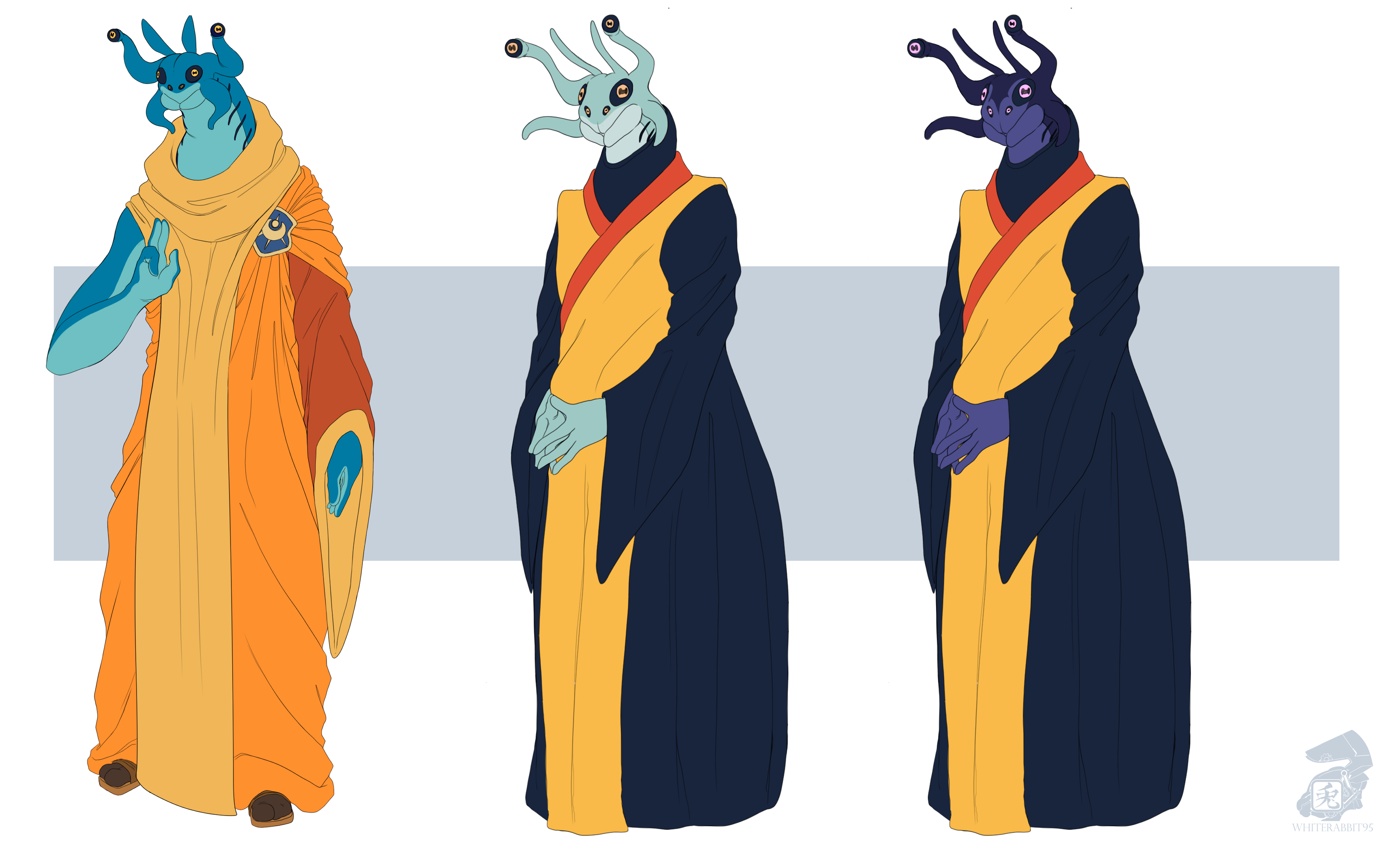
Do not be fooled by their name. The Barboslides are anything but slow. With four eyes and tentacles sprouting from their skulls, their appearance ranges from the exotic to the downright disturbing. Their skin constantly secretes a viscous and corrosive substance capable of dissolving human flesh on contact. Despite lacking visible muscle mass, they move with surprising agility and display unusual resistance to conventional projectiles. However, they rarely resort to violence unless provoked.
Culturally, the Barboslides are deeply spiritual, comparable to Shaolin monks. They exhibit no sexual dimorphism and reproduce by laying eggs, which makes their social structure strange and incompatible with the norms of other species. They seem immune to fear, lack a sense of ego, and reject hierarchy, which has made diplomacy with them frustrating for more structured civilizations.
Their original integration into the CRN was purely strategic. During the Thousand Year War, their ability to survive in toxic environments and their unpredictable combat style made them useful. However, over time, they were deemed too expensive to maintain as an active force.
Today, their role within the Coalition is more that of a tributary protectorate. Their home planet is toxic and nearly uninhabitable for other races, except for themselves. As such, the Slugmen no longer provide soldiers or strategic support but instead pay tribute in the form of precious materials, rare metals, and corrosive substances extracted from their deep oceans. In return, they are protected from dissidents and attacks due to their strange way of dealing with warfare.
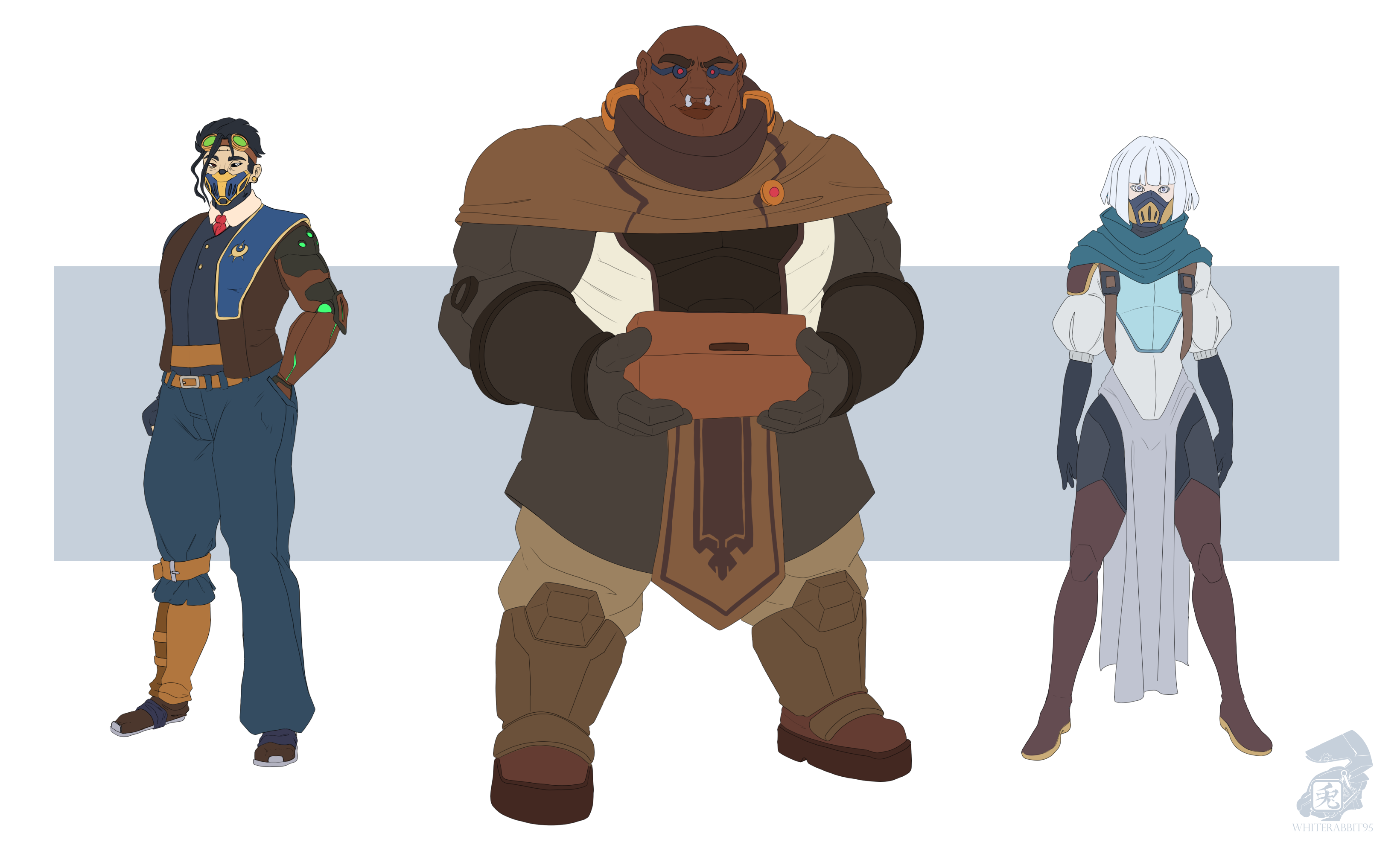
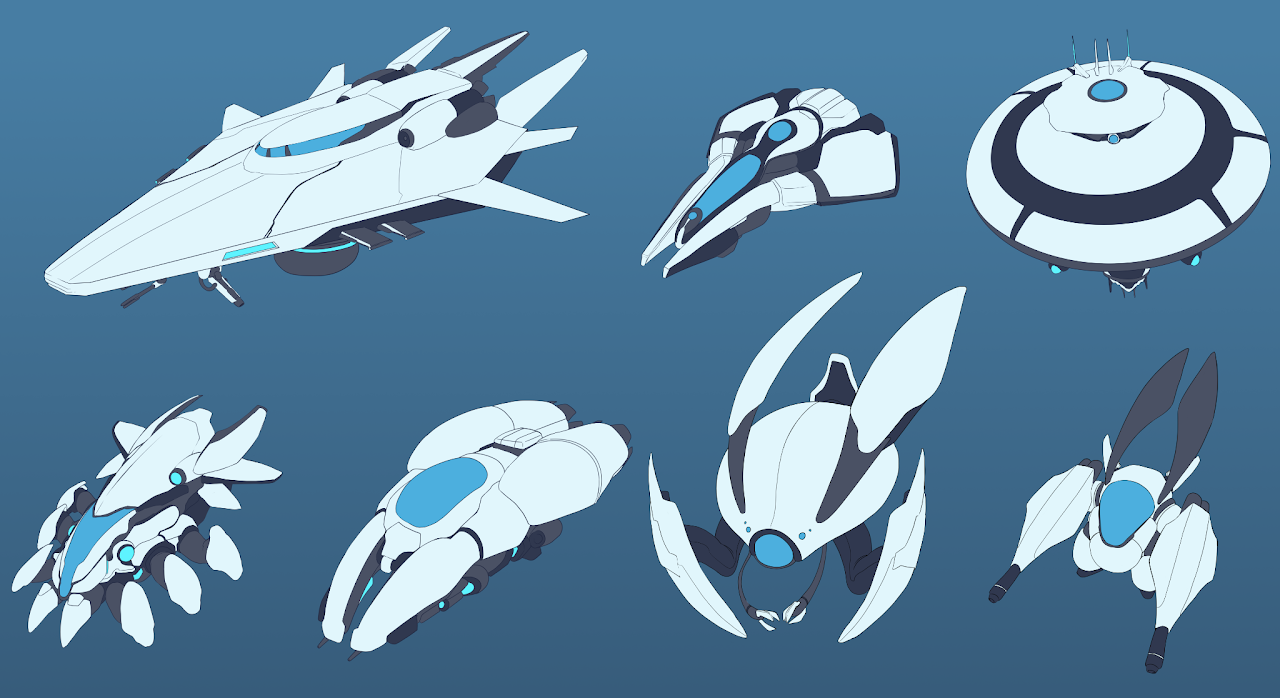
Nomad Terrans are, in essence, a loosely defined class of spacefaring humans genetically modified, cybernetically enhanced, or fully synthetic. They have no true homeland. Their ships are their homes, their roads, and their shields. Most live among asteroid debris fields or on heavily modified mobile platforms that serve as space stations or caravan hubs.
During the Thousand Year War, many Nomads profited by smuggling supplies and resources for the Gelodians. Though they never formally joined the war effort, certain clans struck lucrative deals that allowed them to thrive in the chaos. Yet, true to their nature, they never pledged allegiance to any one faction. Nomad Terrans are wanderers, constantly on the move, avoiding government oversight and planetary bureaucracy.
Their way of life is forged along dangerous routes, forgotten systems, and floating stations where few dare to enter. Their ships, though modest, are extensively modified: they function as homes, arsenals, markets, and mobile fortresses. Each clan upholds a strict communal code, sharing technology, weapons, supplies, and most importantly, critical information about unexplored territories, smuggling routes, and hidden threats.
They are bounty hunters, explorers, traders, pirates… and often all of these at once. Always on the move, always in the shadows, their loyalty belongs solely to their own and to the freedom the void offers them. Only during the Great Winter, when starlight vanished and interstellar navigation became near-impossible, the Nomads were among the first forced to land on unknown worlds. Their small to medium-sized ships, designed for long hauls rather than war, were scattered across dead systems. Many never returned to space. Those who did brought back maps, atmospheric data, and geological scans, vital information that Gelidium and Nexusterra used to claim and terraform new colonies.
Though a fragile truce currently exists between them and Gelidium, tensions remain. Some Nomad clans still carry out raids or smuggle forbidden tech, walking the thin line between outlaw and asset.